James K. Polk: War, Expansion, and the Weight of Office
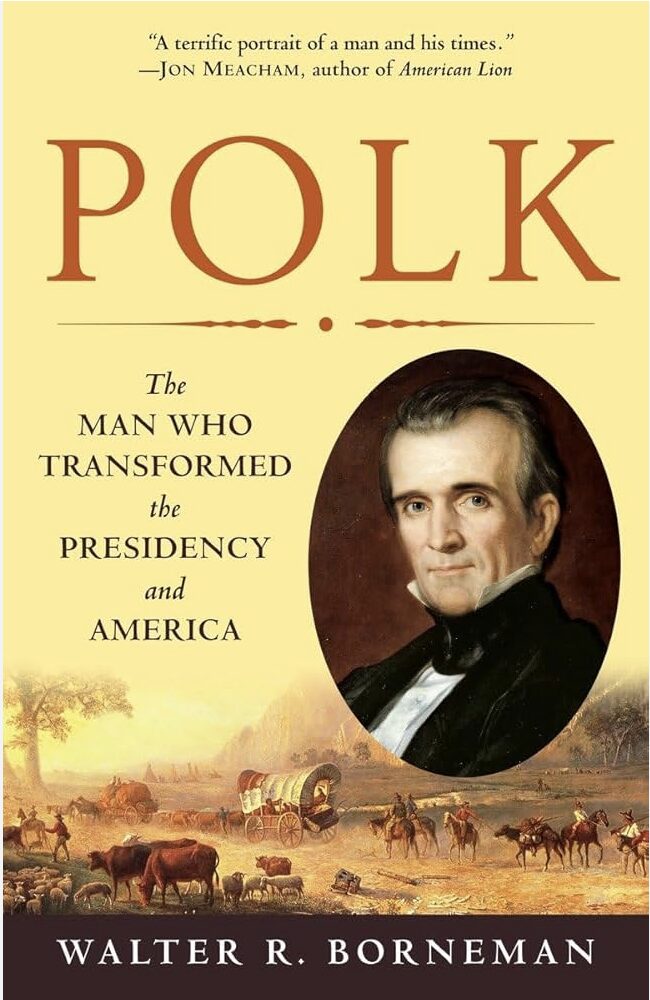
Polk: The Man Who Transformed the Presidency and America
Walter Borneman
Thoughts on the Biography
Walter Borneman’s Polk: The Man Who Transformed the Presidency and America is one of those biographies that quietly overdelivers. It reads quickly, almost deceptively so, but carries real weight in how it reframes James K. Polk and our contemporary understanding of the man and his times. Knowing very little about Polk personally, a president of relatively obscure fame today, I appreciated Borneman’s contextual backdrop in parallel to analyzing the man and his way of working himself. The result is that this ended up becoming a story about American expansion, executive power, and a country accelerating toward an uncertain future. And it also became one I had a hard time putting down.
Like some of the better presidential biographies, the book succeeds not by over-romanticizing its subject. However, it did increase my overall respect and admiration of the man. By placing him squarely within the machinery of his time, one learns as much about Polk as well as fascinating time in America. Occasionally seems more interested in the era than the man himself. But in Polk’s case, that may actually be the point. This biography overall was good and often very good at times (ie. the Baltimore convention section). While it might not stand up with the elite biographies in this journey, it certainty rose above many of the others. It truly was a fun read and difficult to put down.
A Fragile Beginning and a Disciplined Rise
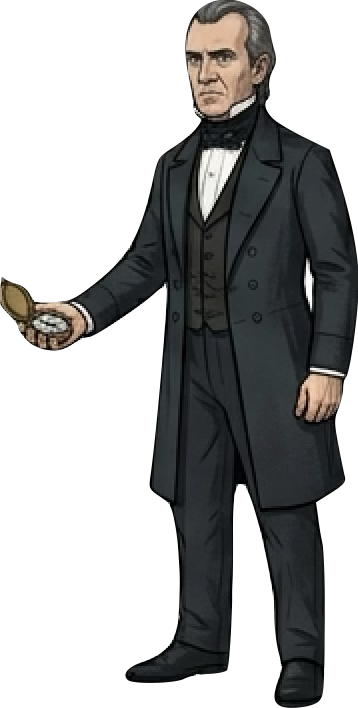
One of the more surprising elements early on is just how physically fragile Polk was. Chronic health issues, including urinary stones, culminated in a brutal surgery when he was still a teenager. It’s the kind of detail that feels almost out of place when compared to the driven, relentless political figure he would become but one can’t help wonder if this impacted him down the road: physically unable to have children and mentally driven to succeed.
And this discipline shows up quickly. At the University of North Carolina, Polk immersed himself in debate and rhetoric, eventually leading the Dialectic Society. It’s not hard to draw a line from that experience to the precise, methodical politician described throughout the rest of the book.
His early political career feels almost conventional by comparison. A loyal ally to Andrew Jackson, Polk “carried the water” for Old Hickory and rose steadily, eventually becoming Speaker of the House. But even here, there’s an undercurrent of persistence rather than inevitability. His failed bids for the Tennessee governorship, despite incredibly extensive campaigning, serve as a reminder that his path was anything but guaranteed.
My Takeaway: Polk’s rise feels less like destiny and more like accumulation. Discipline, loyalty, and timing mattered more than charisma or natural political stardom.
The “Dark Horse” Who Wasn’t
The most compelling section of the book and arguably its centerpiece of my reading is the 1844 Democratic convention in Baltimore. Borneman turns what could have been procedural political history into something genuinely engaging. This is no small feat as many other biographies fail in their write-ups of these times with their subjects. The deadlock between Martin Van Buren and Henry Clay (on the Whig side) over Texas annexation created an opening that few seemed to anticipate an Borneman sets this up perfectly.
Polk emerges here as both opportunist and strategist. The “dark horse” label is technically accurate, but also somewhat misleading. As Borneman notes, the question is whether Polk came from nowhere or whether he was simply the most prepared figure waiting for the right moment.
The convention itself, combined with the relatively new technology of Samuel Morse’s telegraph, gives the entire episode a surprisingly modern feel. News traveled faster, narratives formed quickly, and momentum mattered.
Even the general election reflects this sense of contingency. Polk loses his home state of Tennessee but wins the presidency largely due to vote-splitting in New York, where the Liberty Party siphons support from Clay. It’s the kind of narrow, almost accidental outcome that feels familiar even now given a near identical turn of events with Ronald Regan presidency.
My Takeaway: Political breakthroughs often look inevitable in hindsight, but Polk’s election feels anything but. He recognized his circumstances and positioned himself to succeed through political maneuvering and hard work.
Expansion, War, and Presidential Power
If Polk’s rise is about timing, his presidency is about action.
Almost immediately, his attention turns westward to California and Oregon and to the broader idea of Manifest Destiny. Borneman presents this less as abstract belief and more as operational policy. Polk assumes expansion and it becomes a core policy for his presidency.
What follows is one of the more consequential and controversial stretches of any presidency. The lead-up to the Mexican-American War is one not remembered well in modern day and one can’t help but wonder if what was a seemingly a ‘war of conquest’ is one we want to enjoy the end but disregard the means today.
The book raises a central question: was diplomacy ever truly the goal? Or was it a step toward a foregone conclusion? It weaves through the answer as it seems that Polk (and Buchanan) had an eye for expansion but carefully created a public image of defense of the homeland. Did we really spill American blood on a American soil on disputed territorial land?
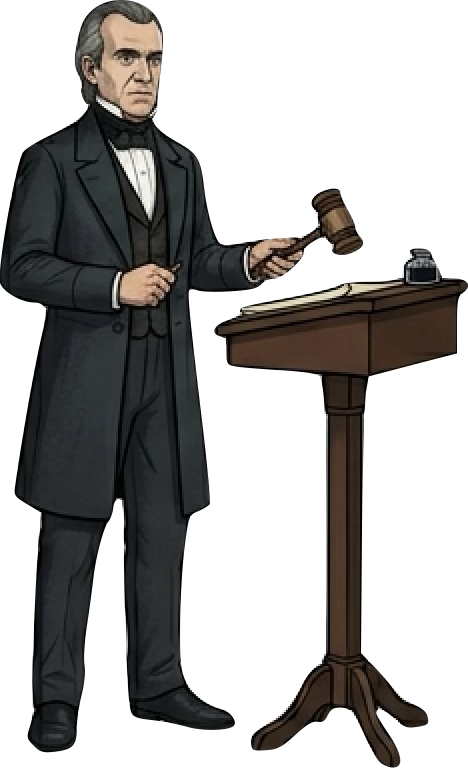
Polk’s actions seem to suggest territory was always the goal. His orders to Zachary Taylor to move beyond the Rio Grande, followed by reports of “hostilities,” effectively set the stage for war. His pressure on Congress to act as well as framing hesitation as weakness marks a noticeable shift in presidential assertiveness compared to earlier figures like James Madison.
My Takeaway: Polk may be one of the clearest early examples of a president shaping events to justify policy, rather than reacting to them. The office feels more active under him. It seems sometimes legacy is born from reacting to events; other times it forms by creating them.
The War at Home
As the war progressed, its political consequences became harder to contain.
One of the more fascinating threads Borneman explores is how debates in Congress began to shift. What started as a conflict framed around national interest increasingly exposed sectional divides, particularly over slavery in newly acquired territories.
The appropriation maneuvering and attempts to influence Mexico’s leadership and conditions on territorial expansion reads almost like political sleight of hand. But the late-stage amendment restricting slavery in those territories changes everything. Voting patterns begin to align less along party lines and more along sectional ones.
It’s a subtle but important turning point in US History. It’s one that hints at the coming fracture.
Opposition also grows more visible. A young Abraham Lincoln, then a freshman congressman, emerges as a critic of Polk’s justification for the war. It’s a small detail, but one that carries weight in hindsight. It’s also worth noting that the book becomes a who’s who in future presidents playing a part during this time: Lincoln, James Buchanan, Millard Fillmore, Zachary Taylor & Franklin Pierce.
Meanwhile, even the conclusion of the war carries its own drama. Diplomat Nicholas Trist negotiates a treaty despite having been recalled, adding yet another layer of complexity to an already chaotic process. This history was completely new to me and a fascinating read, even if it was superfluous to my journey on learning about the presidents only.
My Takeaway: The Mexican-American War did more than just expand theUnited States. It also accelerated the divisions that would soon define it. Polk achieved his goals, but at a cost that wasn’t immediately visible, despite his loyalty to the union.
A Presidency with an Expiration Date
One of the more unusual aspects of Polk’s presidency is how clearly defined it was. A feat that still catapults his name to the top of parts of best presidents lists.
He entered office with a set of goals and, remarkably, accomplished them all. Territorial expansion, tariff reform, an independent treasury are all checked off within a single term.
And then, he left. Exhausted and relieved.
Polk’s decision not to seek reelection appears genuine. By the end of his presidency, he was physically depleted, a stark contrast to the driven figure who entered office. There’s something almost transactional about his time in power: a job taken on, executed, and concluded.
His interactions with President-elect Zachary Taylor are cordial, even if not especially warm. The peaceful transfer of power, including a White House dinner, feels notable given their political differences.
But what stands out most is how quickly it all ends. Polk returns home, travels through the South with Sarah, and dies not long after leaving office.
My Takeaway: Few presidents have treated the office as a finite mission the way Polk did. It’s efficient and almost clinical. It leaves little room for reflection or adjustment. His one term, though impactful, seems to have left little interest for modern analysis outside of historians.
A Legacy Overshadowed
Borneman closes with what is arguably the strongest section of the book. He ends with a final, sweeping assessment of Polk’s legacy.
It reads almost like end credits to a movie in that it lists accomplishments that, taken together, are difficult to ignore. Territorial expansion on a massive scale. A more assertive executive branch. Clear, defined policy goals achieved within a single term. It also does a roll call of key players of his time and their contributions and ends.
And yet, Polk remains relatively obscure.
Part of that is timing. His presidency sits in the shadow of growing sectional conflict and, ultimately, the Civil War. The scale of what followed makes it harder to isolate and appreciate what came just before.
But part of it may also be Polk himself. There’s little mythmaking, little personality to latch onto. He feels more like an instrument of policy than a larger-than-life figure.
My Takeaway: Polk may be one of the most effective presidents whose legacy is least remembered. Impact doesn’t always translate to recognition.
Lessons from James K. Polk’s Life
- Opportunity favors preparation. Polk wasn’t inevitable, but he was ready when the moment came.
- Clear goals can define a presidency, but they can also limit how it’s remembered.
- Expanding power, even effectively, can set precedents with long-term consequences.
- Political victories in the moment can accelerate deeper, unresolved conflicts.
- Legacy is shaped as much by what follows as by what is accomplished.
Sidebar / Quick Facts
- James K. Polk was born in 1795, within 20 miles of Andrew Jackson.
- He underwent a major surgical procedure as a teenager, likely affecting his ability to have children.
- Polk graduated with honors from the University of North Carolina in 1818.
- He served as Speaker of the House before becoming president.
- Polk lost his home state of Tennessee in the 1844 election but still won the presidency.
- He oversaw the Mexican-American War, which significantly expanded U.S. territory.
- Polk pledged to serve only one term and kept that promise.
- He died just months after leaving office, in 1849.