Zachary Taylor: Old Rough and Ready, Unexpected President
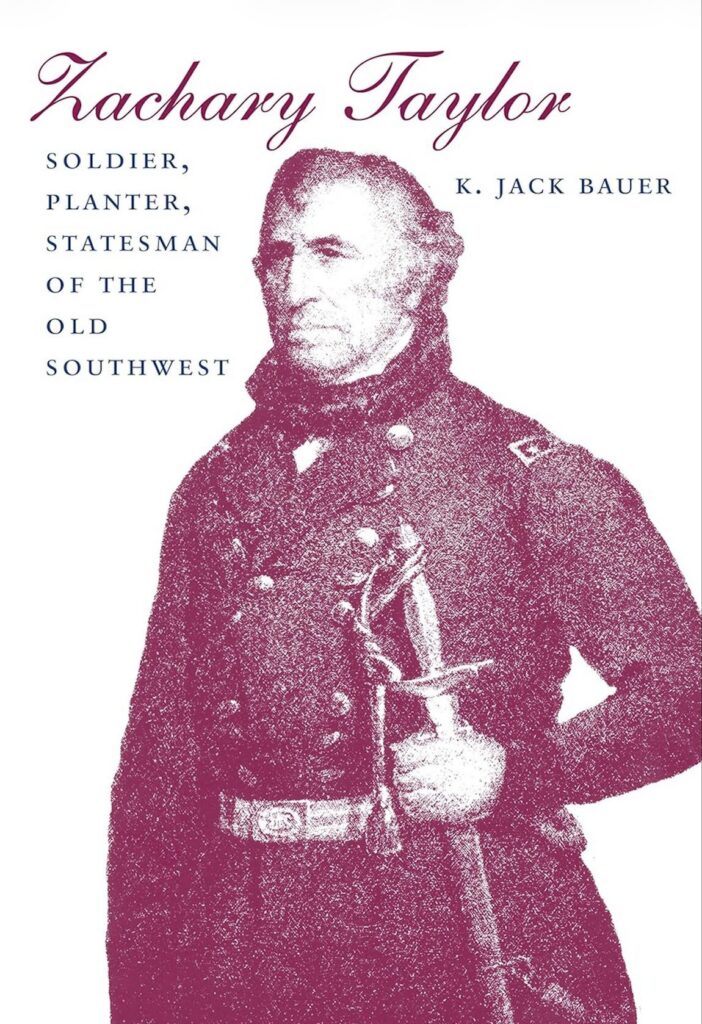
Zachary Taylor: Soldier, Planter, Statesman of the Old Southwest
K. Jack Bauer
Thoughts on the Biography
Jack Bauer’s Zachary Taylor: Soldier, Planter, Statesman of the Old Southwest presents Taylor less as a towering political thinker and more as a product of the expanding American frontier and military tradition. The biography is deeply researched and exceptionally detailed in its treatment of military campaigns, logistics, and battlefield politics, though it leaves portions of Taylor’s personal life frustratingly opaque. Bauer acknowledges this limitation directly, noting that many of Taylor’s personal papers were lost during the Civil War, leaving historians to reconstruct much of the man through official correspondence, military records, and the recollections of contemporaries.
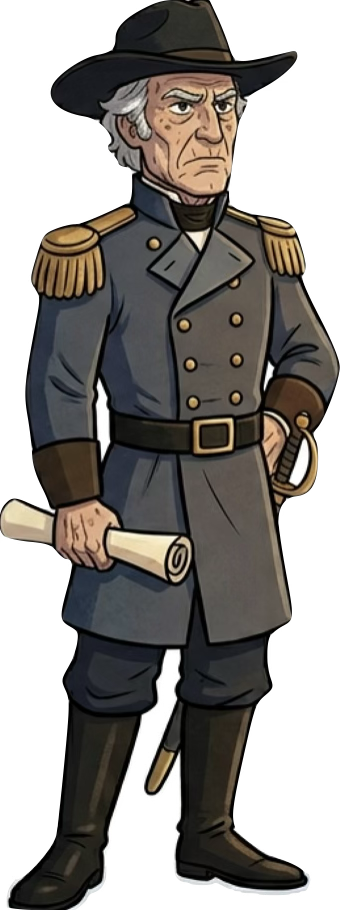
What emerges is a portrait of a capable but imperfect soldier who stumbled almost reluctantly into national fame. Taylor was neither intellectually dazzling nor politically sophisticated. In fact, Bauer repeatedly pushes back against the mythology that later surrounded him. However, Taylor still emerges as compelling precisely because of his ordinariness. He was blunt, resilient, practical, and deeply tied to the rough edges of frontier America. His rise reflects how nineteenth-century Americans often projected greatness onto military figures who embodied simplicity, toughness, and national expansion.
Before reading Bauer’s biography, my understanding of Zachary Taylor was mostly confined to broad strokes: a Mexican-American War hero, “Old Rough and Ready,” and a president who died shortly after taking office. Bauer’s work paints a far more textured picture. Taylor was not a strategic genius in the mold of Napoleon, nor was he a visionary statesman. Instead, he appears as a career soldier shaped by hardship, personal tragedy, and the political currents of a rapidly expanding republic. His fame was as much constructed by circumstance and public imagination as by extraordinary accomplishment.
Early Life, Frontier Roots, and Limited Education
One of the striking aspects of Bauer’s biography is how little is truly known about Taylor’s formative years. Much of the documentary record disappeared with the destruction of family papers during the Civil War. What survives presents a fairly unremarkable beginning. Taylor’s family relocated to the Louisville area after his father received land grants for Revolutionary War service, embedding the family within the westward movement of the early republic. Littered throughout the biography is the word “probably,” as in, Taylor probably did or thought something.
Taylor’s education was limited and unimpressive. His grammar, spelling, and penmanship were notoriously poor, though they improved over time through military service and necessity. Bauer never portrays Taylor as particularly intellectual or scholarly. Instead, he seems to have absorbed the values of military life simply by existing within frontier society, where conflict, expansion, and service were constant realities.
“Taylor was shaped less by formal education than by the demands of the frontier.”
My Takeaway
It’s fascinating how many early presidents possessed extraordinary intellectual gifts, only for someone like Taylor to emerge almost as their opposite. He lacked polish, brilliance, and rhetorical power, yet still rose to national prominence. In many ways, Taylor feels like an embodiment of frontier America itself: practical, durable, and unconcerned with refinement. His life suggests that Americans often admire competence and toughness just as much as intellect.
Army Life, Hardship, and Personal Tragedy
Much of Bauer’s book focuses on the rhythms of army life in the early nineteenth century. At times, the detail surrounding troop movement, military politics, and frontier logistics can feel exhaustive, but it also reinforces how deeply Taylor’s identity was rooted in service. He first saw combat during the War of 1812 and briefly resigned after feeling slighted over promotion disputes, only to return to service during army reorganization.
Taylor’s career carried him throughout the frontier, particularly in Louisiana, which increasingly became the place he considered home more than Kentucky. He purchased a plantation there and fully embedded himself within the culture of the southern frontier planter class.
The biography also reveals a man touched repeatedly by personal tragedy. While stationed near Green Bay, two of Taylor’s young daughters died from “bilious fever,” a devastating loss that hangs quietly over the narrative. Later came the painful episode involving his daughter Sarah Knox Taylor, known as “Knox,” and Jefferson Davis. Taylor opposed her marriage not because he disliked Davis personally, but because he distrusted the hardships of military life. Ironically, after Davis resigned his commission and they married, the couple contracted malaria. Davis survived; Knox did not.
“The army gave Taylor purpose, but it also extracted profound personal cost.”
My Takeaway
Bauer is often restrained in emotional interpretation, but the tragedy speaks for itself. We continue to read about personal loss so common during this time, but I try and remember the toll on the human beings themselves, president or otherwise. Taylor spent so much of his life in motion, stationed far from stability, that it’s hard not to view his family losses as intertwined with the burdens of military service. It also humanizes him beyond the rough frontier image history tends to preserve.
The Seminole War and the Birth of “Old Rough and Ready”
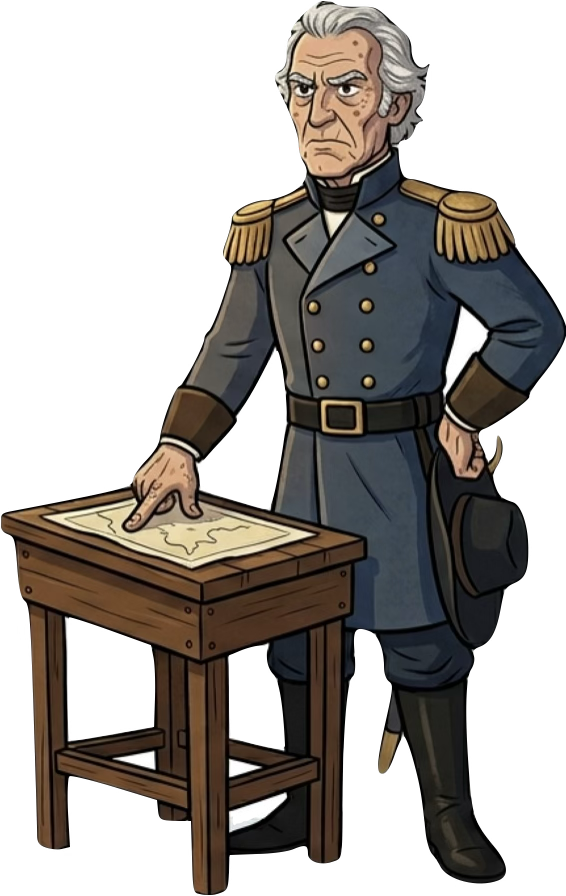
Taylor’s national image truly emerged during the Seminole War in Florida. Bauer notes that Taylor was not necessarily more successful than other commanders in the conflict, but he avoided many of the campaign’s political disasters and achieved one notable battlefield success through tactical adaptation. His use of defensive squares against Seminole fighters helped compensate for an enemy that refused conventional battle.
More importantly, Taylor cultivated loyalty among his men by sharing hardships and provisions with them. It was here that the nickname “Old Rough and Ready” took hold, helping craft the image that would later propel him into politics.
“He looked less like a polished officer and more like the frontier itself.”
My Takeaway
It’s interesting how reputation often forms around symbolism more than pure accomplishment. Bauer repeatedly argues that Taylor was not uniquely brilliant militarily, yet his image resonated deeply with Americans. There’s something timeless about the appeal of leaders who appear approachable, durable, and willing to endure discomfort alongside ordinary people.
The Mexican-American War and the Creation of a National Hero
The Mexican-American War elevated Taylor’s image into national mythology. Bauer writes especially well about the campaigns around Monterrey and Buena Vista, balancing military analysis with political tension surrounding the Polk administration. Taylor’s victories turned him into a public sensation, despite Bauer’s repeated skepticism regarding Taylor’s actual strategic brilliance.
One of the strongest sections of the book centers on Monterrey. Bauer carefully explores both the military and political dimensions of Taylor’s controversial armistice with the Mexican forces. While President Polk viewed the agreement as a violation of orders, Bauer argues it is difficult to fault Taylor given the realities on the ground.
The Buena Vista campaign receives similarly detailed treatment, though Bauer is far harsher here. He portrays Taylor as stubborn, suspicious of criticism, and too eager to interpret disagreement as political sabotage. Bauer ultimately concludes that Taylor’s battlefield reputation owed as much to weak opponents and talented subordinates as to Taylor himself.
“That little of this fitted Zachary Taylor mattered not at all; his image had been struck.”
My Takeaway
This was probably the most interesting tension in the book. Bauer clearly does not believe Taylor deserved the almost legendary reputation he acquired after the Mexican-American War, yet by the end of these chapters, it becomes understandable why Americans embraced him anyway. Sometimes public figures become symbols less because of pure merit and more because they embody what a nation wants to see in itself. Taylor represented toughness, simplicity, and expansion at precisely the moment Americans celebrated all three.
Reluctant Candidate, Unexpected President
One of Bauer’s more convincing arguments is that Taylor genuinely did not seek the presidency and likely did not feel qualified for it. Taylor wrote repeatedly expressing discomfort with political office, and Bauer rejects the idea that this reluctance was calculated political theater. In Bauer’s telling, Taylor simply lacked traditional political ambition.
Yet the Whigs nominated him anyway, pairing him with Millard Fillmore. Military celebrity once again proved politically irresistible.
Surprisingly, Taylor adapted to the presidency better than expected. Though inexperienced politically, he demonstrated firmness on the defining issue of his administration: preserving the Union amid intensifying sectional conflict. As debates over Texas, California, and New Mexico escalated, Taylor emerged as a staunch defender of national unity despite being a southern slaveholding planter himself.
Foreign policy remained relatively quiet during his administration, giving Taylor space to focus primarily on domestic tensions. Bauer suggests that Taylor showed real growth in office, even if he never transformed into a deeply sophisticated political thinker.
“He was good, not great, and possessed no spectacular intellect.”
My Takeaway
Secretary of State William Marcy’s assessment of Taylor feels remarkably fair. Not every president needs to be a towering genius to matter historically. Taylor’s strength seemed to lie in steadiness and sincerity rather than innovation or vision. There’s something refreshing about Bauer resisting both hero worship and total dismissal. Taylor emerges as competent, flawed, stubborn, and ultimately more consequential than many remember.
Death and Legacy
Taylor’s presidency lasted only sixteen months before his sudden death in July 1850, cutting short what may have become a far more consequential role in the nation’s deepening sectional crisis. His death shocked the country and produced genuine national mourning. Though never a magnetic political figure in the traditional sense, Taylor had come to symbolize steadiness and national unity during an increasingly volatile moment in American history.
Bauer suggests that Taylor’s greatest historical significance may rest less in what he accomplished and more in what he represented. A career soldier with limited formal education and little political ambition, Taylor nevertheless rose to the presidency through military fame and public trust. He embodied the frontier ideal Americans admired: resilient, plainspoken, and durable. Bauer consistently resists transforming him into something larger than he was. Taylor was not a master strategist, a great intellectual, or a transformative statesman. He was, as William Marcy observed, “good, not great.”
Still, there is something compelling about Taylor precisely because of those limitations. His life reflects how nineteenth-century America often elevated men who appeared authentic rather than polished. And despite his shortcomings, Taylor demonstrated unexpected growth in office, particularly in his willingness to stand firmly for preservation of the Union even as sectional tensions accelerated toward Civil War.
My Takeaway
Zachary Taylor left me with a different impression than many of the presidents before him. He wasn’t intellectually dazzling like Jefferson, philosophically rigorous like Madison, or overwhelmingly dominant like Jackson. Instead, Taylor feels almost accidental in his rise. A soldier who became a national symbol largely because Americans wanted one.
History is not only shaped by geniuses or visionaries, but also by steady, imperfect individuals thrust into moments larger than themselves. Bauer’s biography may not fully uncover Taylor the private man, but it does illuminate the kind of country that elevated him and the fragile political moment he briefly helped hold together.
Lessons from Zachary Taylor’s Life
Bauer’s biography offers several broader reflections beyond Taylor himself:
- Public image can eclipse reality: Taylor’s reputation often exceeded his actual military talents, demonstrating how national myths are created.
- Simplicity can become political power: Americans were drawn to Taylor’s rough frontier persona because it felt authentic and accessible.
- Leadership is often circumstantial: Taylor’s rise depended as much on historical timing and public sentiment as individual brilliance.
- Military life carries hidden costs: The personal tragedies within Taylor’s family reveal the emotional burdens behind frontier service.
- Growth matters: Despite lacking political experience, Taylor demonstrated an ability to adapt and mature in office.
Sidebar / Quick Facts
- Taylor earned the nickname “Old Rough and Ready” because he shared hardships and supplies with ordinary soldiers rather than maintaining strict separation from the ranks.
- Jefferson Davis, future president of the Confederacy, married Taylor’s daughter Sarah Knox Taylor after resigning his military commission.
- Taylor considered Louisiana, not Kentucky, his true home due to the many years he spent stationed and living there.
- Much of what historians might have known about Taylor personally was lost when family papers disappeared during the Civil War.
- Taylor died only sixteen months into his presidency, cutting short what may have become a far more consequential role in the growing sectional crisis.