James Monroe: Steady in the Shadow of Giants
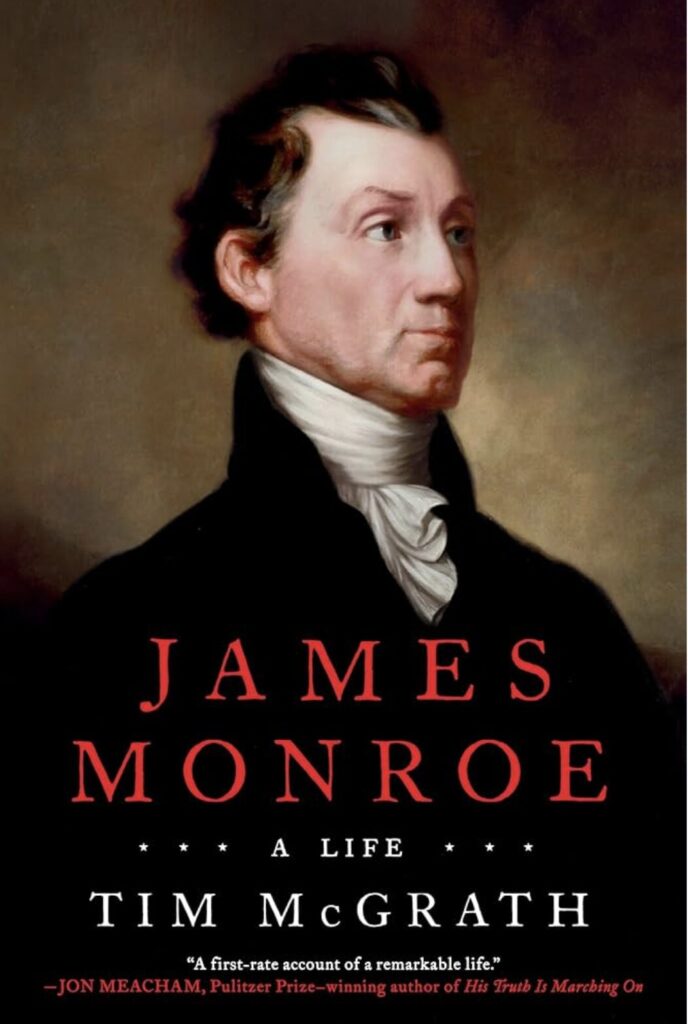
James Monroe – A Life
Tim McGrath
Thoughts on the Biography
McGrath’s James Monroe: A Life reveals a president often overshadowed by the brilliance of the Founding generation and the boldness of the Jacksonian era. Monroe’s story sits between them, in a quieter register during the “Era of Good Feelings”. But quiet does not mean minor. He appears again and again at the fulcrums of early American history wars, treaties, crises, compromises. He seems to have been everywhere.
Yet the prose itself is challenging. McGrath frequently reaches for lofty or archaic vocabulary (“invective,” “imbroglio,” and others) that impedes readability. Paragraphs required re-reading, and the attempt to craft cliffhangers often fell flat. Compared to Chernow, Ellis, or Meacham, McGrath’s style feels less fluid and more self-conscious. But, at the very least, it’s comforting to read a modern biography dedicated to a somewhat unknown president with his modern prose and perspectives. And there are some marvelous pieces of writing and quotes that stand out.
Even so, McGrath succeeds at least partially in it’s attempt at restoring Monroe’s place in the historical narrative. It shows a man whose contributions were significant, even if his fame faded next to the more dramatic figures surrounding him.
For readers, Monroe becomes a case study in how influence can accumulate quietly. Legacy is not always determined by volume or charisma. His life reminds us that the nation was shaped not only by its most brilliant or its most bombastic leaders, but also by those whose steady hands kept the early republic intact.
Before reading James Monroe: A Life, my understanding of Monroe was limited to the Monroe Doctrine and a general sense of foreign-policy neutrality. But Tim McGrath’s biography reveals a far more active, resilient, and deeply involved figure. Monrow is someone present at nearly every defining moment of the early republic and emerges as a man whose legacy is quieter than his predecessors and successors, yet no less consequential. He was shaped by war, scarred by personal loss, tested by political exile, and ultimately responsible for steering the nation through one of its most fragile eras.
Early Life, Revolutionary Service, and Political Formation
McGrath traces Monroe’s arc from his early years in Virginia to the Revolutionary War, where he fought with distinction and participated in Washington’s daring Christmas Day crossing of the Delaware (even being wounded). Though often overshadowed by more recognizable names in the famous painting, Monroe was very much there on the fateful Christmas Day battle.
Following the war, Monroe’s political ascent accelerated: senator, diplomat, governor of Virginia. As Minister to France, he became embroiled in controversy during the fallout from the Jay Treaty which was an unfortunate diplomatic crisis that ruptured his relationship with George Washington. That breach, McGrath notes, never fully healed.
Like many founding fathers, his personal world was also marked by hardship: Monroe and his wife Elizabeth lost their infant son to whooping cough, a tragedy that devastated them. Another stark reminder of the human element behind these figures.
“Monroe was present at so many shaping moments, yet history often pushed him to the margins.”
My Takeaway: Monroe’s early career shows that history is often shaped by figures who aren’t at the center of the canvas. His persistence, reliability, and willingness to serve in unglamorous roles built the foundation for later influence. Not all are born into greatness, but with steadfast determination and directed ambition, individuals can make a mark on history.
Diplomacy, Disputes, and the Burdens of Leadership
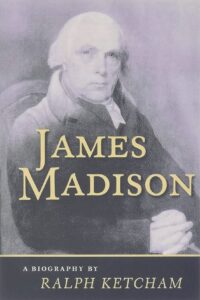
Monroe’s path was rarely smooth. As governor of Virginia, he notably faced the Gabriel slave uprising. This tense and morally fraught moment forced him to confront the realities of slavery in a nation built on liberty. Later, as diplomat to Britain, his treaty with the British failed to include protections against impressment, sparking a rift with Jefferson and especially Madison.
He attended Napoleon’s coronation in France, navigated the intense politics of U.S.–European relations, and managed the “Old Republican” faction that wished to see him challenge Madison for the presidency. He refused but it did leave a lingering tension.
Eventually, Monroe and Madison reconciled. Monroe was reelected governor of Virginia, then joined Madison’s administration. During the War of 1812, Monroe clashed with Secretary of War John Armstrong over the defense of Washington with history vindicating Monroe when the capital fell. He became known for days spent on horseback, scouting, organizing, and simply doing the work others failed to do.
“Monroe knew what chaos looked like, and he refused to be passive in the face of it.”
My Takeaway: Monroe’s leadership was forged less through ideology than through steadiness. He stepped into voids left by others, demonstrating that competence and resolve can be as influential as brilliance. Madison’s intelligence didn’t seem to sparkle like his predecessors. In fact, he was often critiqued (in this biography and others) on his somewhat inability to make decisions. But, being in the right place at the right time and, with a little luck, Monroe was able to ascend to the highest office and, what’s more, understood it’s relevance and his place in it.
The Presidency, Tours, and the Era of Good Feelings
Monroe’s run for the presidency was almost uncontested. The Federalist Party was collapsing and opponent Rufus King stood little chance. His real competition came earlier, from William H. Crawford within his own party who withdrew for strategic reasons, an action that harmed his own future more than Monroe’s.
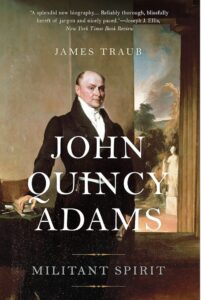
Once in office, Monroe took a nationwide tour for the first time for a president since Washington. He also became the first sitting president to cross the Mississippi River and sought to unify a nation shaken by war, panic, and political division. The support he gathered and the outline provided by McGrath was a great read. In addition, several pages are rightfully dedicated to John Quincy Adams, his Secretary of State, as he emerged as an indispensable partner. Their relationship was marked by mutual respect and pragmatic collaboration.
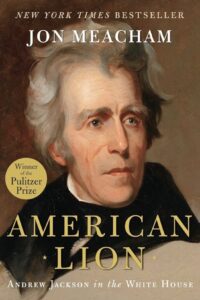
His presidency was also tested by Andrew Jackson where his actions in Spanish controlled Florida raised the issue of whether Monroe had approved his aggression (invasion and British executions). McGrath’s telling suggests ambiguity through an unclear chain of communication through Congressman Rhea and a famously vague January 6 letter. Whether Monroe sanctioned Jackson’s behavior or simply tolerated it remains unresolved.
The Panic of 1818 shook the illusion of national stability. Monroe understood that the so-called Era of Good Feelings rested on “shifty sands,” as McGrath phrases it. Meanwhile, the Missouri Compromise stood as a monumental challenge and one Monroe navigated almost entirely without substantive help from Jefferson or Madison. Their sympathy did not translate into support. The compromise, controversial then and now, arguably “saved the union… for now.”
“It was caution, not conscience, which makes cowards of us all.”
Takeaway: Monroe’s presidency underscores the difficulty of governing a nation whose unity was far more fragile than it appeared. His steady stewardship did not solve every issue, but it prevented fractures from becoming breaks. It was the Era of Good Feelings and Monroe was a benefactor of these times, but difficult and tumultous times lie ahead. McGrath is able to set the landscape before Monroe well.
Relationships, Rivalries, and Private Sorrows
Monroe’s private life was marked by love, resilience, and quiet grief. His marriage to Elizabeth was affectionate and enduring, shaped by the loss of their infant son. Elizabeth’s health was fragile, and she struggled with recurring illness, but she adapted to the role of First Lady without imitating Dolley Madison’s more theatrical style. Their daughters, especially one who developed a reputation for snobbery, shaped the family dynamic.
Monroe missed his extended family in New York deeply. Personal stability mattered to him, even as politics pulled him far from home.
His interactions with future presidents such Martin Van Buren, John Quincy Adams, Andrew Jackson, and even the young James Buchanan reflected Monroe’s unique position as a bridge between the revolutionary generation and the rising political class of the 19th century.
My Takeaway: Monroe’s personal world reveals a man defined by quiet devotion rather than spectacle. His steadiness in private mirrored his steadiness in public. Very little, it seems, stands out from both his presidency and personal life. This is not to say this in a negative light. Some leaders and important men in US history may have simply been ‘normal.’
Lessons from Monroe’s Life
McGrath’s biography highlights several enduring themes:
- Stability can be a form of leadership: Monroe often stepped into chaos to provide order.
- Reconciliation matters: His repaired relationship with Madison shows that political alliances evolve and can be strengthened after conflict.
- Presence is power: Monroe was physically present at numerous turning points, from battlefields to diplomatic courts.
- Compromise is sometimes essential: The Missouri Compromise, however imperfect, held the country together in a precarious moment.
- Legacy is not guaranteed: Being overshadowed by brighter or louder figures does not diminish substantive contributions.
Sidebar / Quick Facts
- Monroe fought in the Revolutionary War and was part of the Christmas Day crossing of the Delaware. He was the last president to serve in the Revolutionary War.
- As Minister to France, his handling of the Jay Treaty fallout permanently damaged his relationship with George Washington.
- He attended Napoleon’s coronation and observed firsthand Europe’s shift toward empire.
- Monroe lost his infant son to illness. It deeply affected both him and his wife Elizabeth.
- During the War of 1812, Monroe became known for long days on horseback, scouting defenses when others faltered. It was also the subject of ridicule by political rivals.
- He was the first president to move into the (still unfinished) new White House after the British burned Washington.
- Famously known for the Monroe Doctrine. Ironically, mostly written by John Quincy Adams.
- The Federalist Party collapsed during his rise; the Republican Party splintered into factions that foreshadowed new political alignments.
- Five states joined the Union during his presidency: Mississippi, Illinois, Alabama, Maine, and Missouri.