
Andrew Jackson: Steel and Sentiment
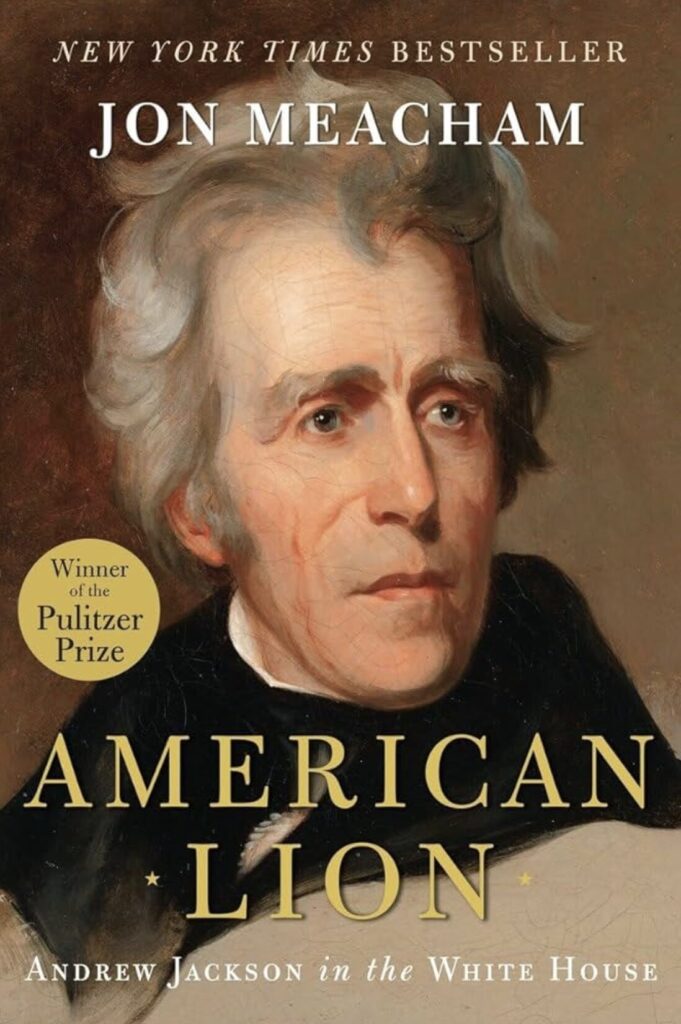
American Lion: Andrew Jackson in the White House
Jon Meacham
Thoughts on the Biography

Jon Meacham’s American Lion is less a traditional cradle-to-grave biography than a sustained meditation on Andrew Jackson’s character during the presidency. It often feels like a defense brief rather than a full accounting. This is not necessarily a flaw, but it is was limitation the overall goal of my journey and one that left me wanting more context, more grounding, and more explanation of how the man became Andrew Jackson.
On that note, Meacham moves astonishingly fast through Jackson’s early life. His upbringing, his Revolutionary War experiences as a teenage prisoner of war, and his rise from frontier lawyer to general are treated almost in passing. The fact that Jackson becomes a national military hero seems nearly assumed rather than earned on the page. At times I found myself asking How did this even happen? How did this man become a general in the first place and what happened at the Battle of New Orleans? When did he become a defining political force of an era?
This is not an error in the biography itself, but rather an error in book selection. However, once Jackson reaches the presidency, where Meacham clearly wants us to linger and is even evident the title itself, the book becomes far more focused, textured, and confident. This is a study of power, temperament, loyalty, and belief of a deeply polarizing man.
Ultimately, American Lion left me more interested in Andrew Jackson and less overall satisfied with my understanding of his life. It is a book that demands a companion volume, preferably one less interested in vindication and more interested in formation. Meacham is a best-selling author for reason and the biography was interesting and readable, but too focused for anyone looking for a long and educational study of Andrew Jackson’s life.
A Man of Family, Loyalty, and Limits
One of the book’s quiet surprises is how family-centered Jackson appears. This was not the image I carried of Andrew Jackson prior to reaching him. Jackson relied heavily on his extended family, particularly his niece and nephew, and Meacham makes clear that these relationships mattered deeply to him.
Yet Jackson was also capable of placing belief above blood. The episode involving his niece Emily in which she was ousted out of Washington society for a time reveals a man who would not bend his principles, even when the personal cost was real. Loyalty, for Jackson, ran deep, but it was seemingly not unconditional.
And of course, Rachel Jackson’s death remains the emotional axis of the book. Meacham returns to her memory often, but unfortunately sometimes to excess. Passages like:
“In the darkness, his only solace was the memory of Rachel. He had sat up deep in the night in many battlefield tents before, his soldiers asleep, his mind racing, and now he was doing so again.”
read more like historical fiction than biography. I found myself resisting these dramatizations. I want stories, documents, and decisions as opposed to imagined candlelight introspection. This may simply be a matter of taste, but it reinforced the sense that Meacham is more interested in imagining a Jackson rather than explaining him.
My Takeaway: Jackson’s emotional world mattered to his governance, but biography risks losing credibility when narrative overtakes evidence. The dramatics around his family and loyatly, as well as a very long review of the Eaton Affair, did demonstrate that Andrew Jackson was more than the firebrand history labels him. Perhaps a lesson for all is that even behind public images are humans first.
Educated Gentleman or Frontier Myth?
One of Meacham’s clear objectives is to complicate the caricature of Jackson as an uneducated, violent backwoodsman. He includes excerpts from contemporaries surprised by Jackson’s courtesy, discipline, and sense of honor. Others, however, are blunt in noting that Jackson was no intellectual heavyweight.
The truth appears to live somewhere in between. Jackson was not a theorist, nor was he careless. He possessed a practical intelligence, shaped by experience rather than books. His thinking was direct, moralistic, and intensely personal. He believed in right and wrong, loyalty and betrayal, strength and weakness.
Whether the “rough frontiersman” image is exaggerated or not, Jackson certainly benefited from it politically. Meacham never fully resolves whether this persona was organic or cultivated, but it hardly mattered. It was powerful currency, especially in the wake of the election of 1824
My Takeaway: Intelligence comes in many forms, but myth can be both politically useful and indistinguishable from reality. Andrew Jackson undoubtedly benefited from this blood lust persona (which was at least somewhat grounded in fact), but he could also wow individuals in intimate settings. Not all individuals can fit in neatly into molds that history has shaped.
Nullification, Union, and the Shadow of War
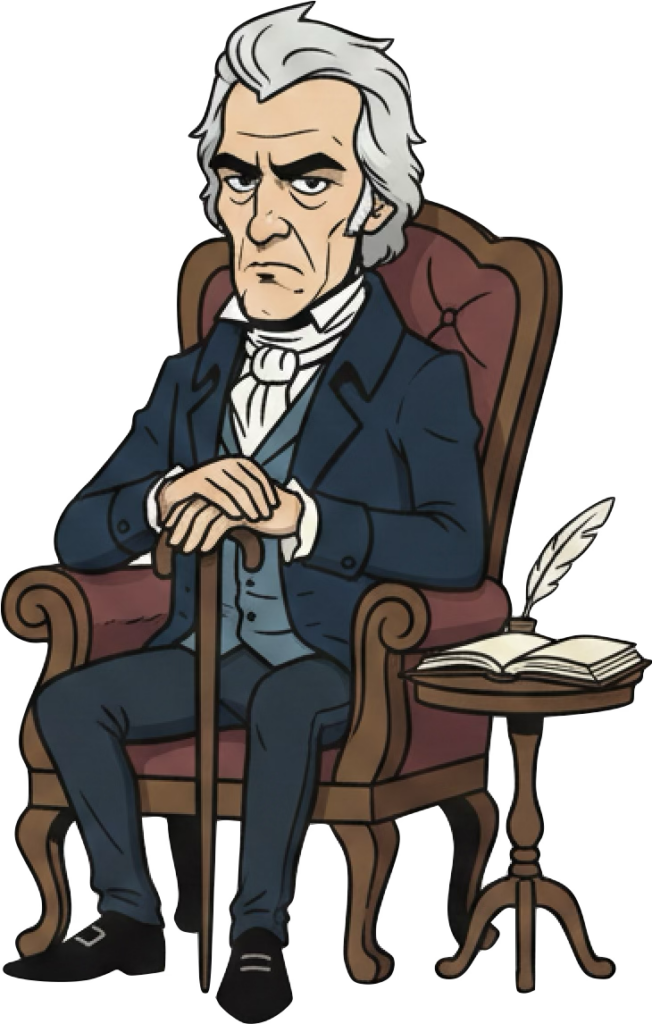
The Nullification Crisis is where American Lion is at its strongest. Jackson’s response to South Carolina’s attempt to nullify federal law reveals the central tension of his presidency: was he acting as the general or the statesman?
The answer is both.
Jackson viewed nullification as an existential threat to the Union. His support for the Force Bill, and South Carolina’s eventual nullification of that, feels shockingly modern and ominous. It is strange how lightly history treats this moment and becomes a page-turner with Meacham’s writing style. He masterfully articulates Andrew Jackson’s feelings toward a state openly defying federal authority.
Jackson’s willingness to use force to preserve the Union stands in stark contrast to his otherwise populist rhetoric about states and the people. Yet to him, there was no contradiction.
My Takeaway: Admittedly, I got lost more in historical significance of this moment rather than in the way Andrew Jackson handled the situation. A side benefit to this journey of studying the presidents is learning more about the eras in which they served. The South Carolina nullification was not something the average reader may know of (I myself, did not). Casual readers and those interested in history may enjoy this biography for this section alone
Strength Abroad, Contradiction at Home
Jackson’s foreign policy moments are also among the book’s most satisfying. His insistence that France pay its debts to the United States is a reminder that early American presidents were deeply concerned with national honor.
His invocation of Washington rings especially true:
“There is a rank due to the United States among the nations which will be withheld, if not absolutely lost, by the reputation of weakness…”
This is Jackson at his best as firm, clear, and unapologetic. It invoked patriotic sentiments in modern day readers and this show of strength was paramount to the continued existence of the US experiment.
But the contradictions that characterized previous presidents remain. Jackson’s suppression of abolitionist speech through the mails stands in stark contrast to his defense of free expression and union during the nullification crisis. Slavery, widely accepted even in the North at the time, remains the great moral blind spot of the era and Jackson is no exception. It is a disappointing stain, and one that Meacham treats gently.
My Takeaway: Sometimes the legends are true. When most people think of Andrew Jackson, they think of the tough frontiersman who didn’t shy away from fights or battles. His application of this personality to his foreign policy seemed genuine. It’s a testament to Andrew Jackson and other presidents of this era that they were confident enough in themselves to apply their way of thinking to their position.
Lessons from Andrew Jackson’s Life
- Character matters but so does context. Jackson’s personality cannot be separated from the age he lived and his violent past.
- Power centralizes fast. Jackson expanded the presidency in ways successors never reversed.
- The Union was fragile early as nullification exposed how close fracture always was. Sometimes being tough in the face of adversity is necessary.
- Myth is political capital. Jackson’s image became as influential as his policies.
Sidebar / Quick Facts
- Jackson read newspapers obsessively and relied heavily on informal advisers rather than formal cabinet deliberation, contributing to the rise of the “Kitchen Cabinet.”
- Jackson was a teenage POW during the Revolutionary War, an experience briefly mentioned but underexplored.
- He was the first president to face an assassination attempt, surviving when both pistols of the would-be assassin miraculously misfired at point-blank range.
- Jackson paid off the entire national debt in 1835.
- The Eaton Affair (Peggy Eaton scandal) dominated much of Jackson’s first term and directly contributed to the collapse of his original cabinet.
- Jackson was deeply suspicious of paper money and speculative finance, believing they threatened republican independence.
- Jackson was the first president to ride a train while in office, reflecting the country’s accelerating technological change.



One Comment