William Henry Harrison: A Lifetime Before the Presidency
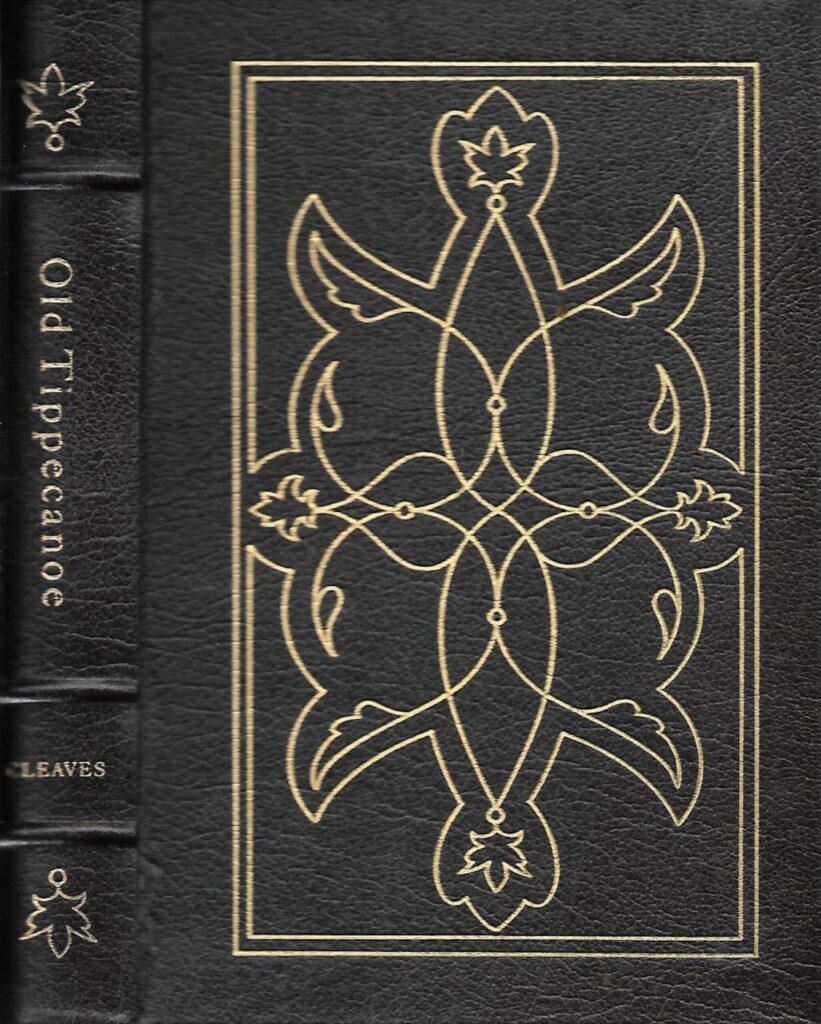
Old Tippecanoe
Freeman Cleaves
Thoughts on the Biography
Freeman Cleaves’s Old Tippecanoe is an older biography that carries surprisingly well for a book approaching a century in age. Its prose is steady, confident, and more readable than expected, even if its interpretive lens reflects an earlier era of historical writing (i.e. uses of words like “Savages”). What the book does best is remind the reader that William Henry Harrison had an entire, consequential life long before his famously brief presidency.
Like many figures reduced to slogans by history, Harrison is often remembered more as an idea than as a person. Cleaves pushes back against that flattening by reconstructing a career that spanned frontier diplomacy, territorial governance, and military command. The tragedy, both of Harrison’s life and the book itself, is that just as the presidency arrives, the narrative simply stops. There is no real reckoning with legacy, consequence, or memory. History ends where it should begin.
For those on a similar journey to read a biography for each president, there might not be a better option than this book. However, it’ll serve its purpose and you’ll be rewarded with both the context of Harrison’s life and the events during it. It may just not stack up as one of the better ones when compared to other, more modern biographies of other presidents.
A Frontier Life Before the White House
One of the book’s great strengths is how thoroughly it reconstructs Harrison’s early and middle career. Harrison spent years working in and around Indian Territory, negotiating treaties, managing fragile alliances, and operating within the deeply unstable frontier world of the early republic. His interactions with Native American leaders, including Tecumseh, form some of the most compelling sections of the biography. There’s a particularly intense scene in which Tecumseh arrives with warriors and he and Harrison sit down to discuss terms. It truly gave the sense a battle could break out at the slightest misunderstanding.
Cleaves does not romanticize this period, but he also does not interrogate it in modern moral terms. Instead, the reader is left to sit with the reality that Harrison’s rise was inseparable from westward expansion and its consequences. He was not merely a military figure parachuted into the frontier as much as he was a long-term participant in its political and territorial transformations.
…he would dress his warriors in petticoats sooner than yield up this fairly acquired land. That was all. Tecumseh turned back to his camp.
My Takeaway: Harrison’s presidency makes little sense unless you understand how deeply shaped he was by frontier governance and Native American diplomacy. He seems an unlikely candidate for presidency, even after his success on the frontier and as a general. Still, he made himself available and didn’t shy from the opportunity.
Tippecanoe and the Burden of Military Reputation
Despite leading troops in the northern campaign during the War of 1812 and achieving fame at the Battle of Tippecanoe, Harrison found himself defending his own military record. In contrast to Andrew Jackson, whose victories seemed to solidify his legend instantly, Harrison’s service was endlessly debated, parsed, and politicized. Whether a circumstance of politics or something rooted in their military records themselves, it was an interesting perspective presented in the book.
And Cleaves captures this tension well. Harrison was a general, but not a mythic one. His victories required explanation. His failures invited criticism. Over time, “Tippecanoe” became less a description of achievement and more a symbol in need of constant reinforcement.
And again, this made Harrison an unusual presidential candidate. He was famous and respected, it seemed, sure, but not the political force of earlier candidates. His elevation feels less inevitable than that of many predecessors, raising the lingering question of how figures like Henry Clay, a seemingly viable candidate, were ultimately able to be outmaneuvered in the process.
The combined loss of money, health and military repute after thirty-odd years spent in the service of his country… made Harrison feel miserable indeed.
My Takeaway: Harrison’s military fame functioned more as a campaign asset than as a settled historical verdict. Sometimes individuals who sought the presidency there whole lives, can by circumstance, be relegated to newcomers. In slightly different turns of events, it would be Henry Clay I’d be reading about as opposed to Harrison.
The Candidate as Symbol
And of course, by the time ‘campaigning began’, the famous chant and songs we know today came into existence. “Tippecanoe and Tyler Too” reduced decades of service into a slogan with the intention of being elected. The Whig campaign leaned heavily into image, populism, and nostalgia, positioning Harrison as a frontier hero despite his elite background. It was a clever approach to contrast the ‘foppish’ Martin Van Buren.
Cleaves recounts this transformation effectively, though without much critical distance. What emerges is a candidate who feels oddly modern, marketed, simplified, and detached from the complexity of his actual life.
If a Democrat tried to speak, argue or answer anything that was said or done, he was saluted with a fresh deluge of music.
My Takeaway: Harrison may be one of the earliest examples of a president whose symbolic value outweighed his political agenda (or at least, masked it). Beyond the symbol when elected, Harrison did have an agenda he sought to apply, but of course, never had the chance to carry it out.
A Life That Ends Without Reflection
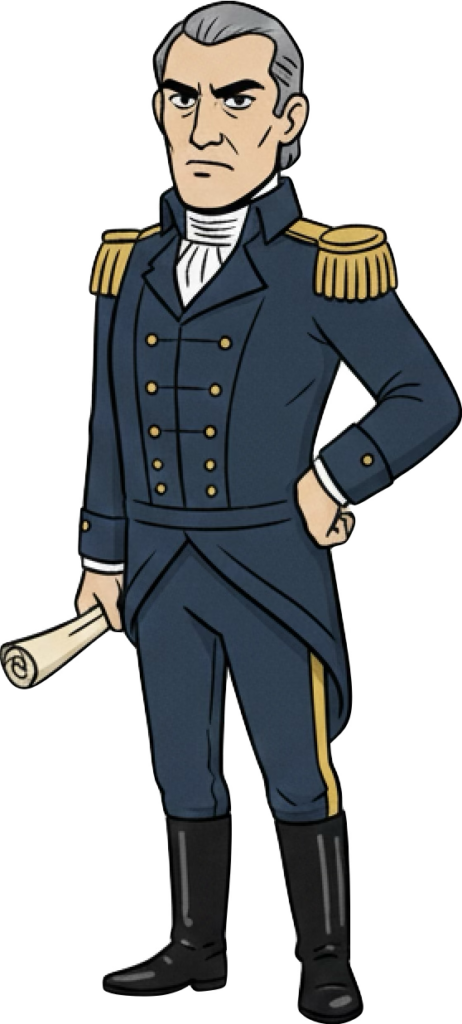
Perhaps the most disappointing aspect of Old Tippecanoe is how it concludes. Harrison’s death is treated as an endpoint rather than a beginning of interpretation. There is little exploration of what his presidency meant, how his death reshaped the office, or how his memory evolved afterward.
The book closes on a strangely impersonal note, mirroring Harrison’s own historical fate. He becomes an event rather than a legacy. The reader is left informed of a death of a president, but not fully satisfied as to it’s repercussions.
“Sir, I wish you to understand the true principles of the government. I with them carried out. I ask nothing more.” – William Henry Harrison’s last words
My Takeaway: Harrison’s life deserved an epilogue both in history and in biography. However, sometimes things out of one’s control can provide the lasting legacy of a life. For all his exploits, William Henry Harrison becomes a US history footnote: “shortest presidency.”
Lessons from William Henry Harrison’s Life
- A long and complex career can be overshadowed by a brief moment at the end.
- Military reputation (or reputation in general) is not always self-sustaining and it can require constant defense.
- Political symbolism can elevate candidates whose governing impact remains unknown. Even then, being seen as a common man (i.e. log cabin) could be used for impact.
- Not all greatness is captured in the pages of history but impact is no less meaningful. A reminder to build and chase greatness anyway.
Sidebar / Quick Facts
- William Henry Harrison was born in 1773 and was the last U.S. president born as a British subject.
- He served as governor of the Indiana Territory for over a decade before becoming president.
- Harrison negotiated numerous treaties with Native American tribes, including agreements involving lands claimed by Tecumseh’s confederation.
- He commanded U.S. forces in the northwestern theater of the War of 1812.
- Harrison had ten children, the largest family of any U.S. president.
- His 1840 campaign popularized the slogan “Tippecanoe and Tyler Too.”
- Harrison served the shortest presidency in U.S. history, dying just 31 days after his inauguration.
- His death marked the first presidential death in office, creating uncertainty about succession.