
George Washington: The Man Behind the Legend
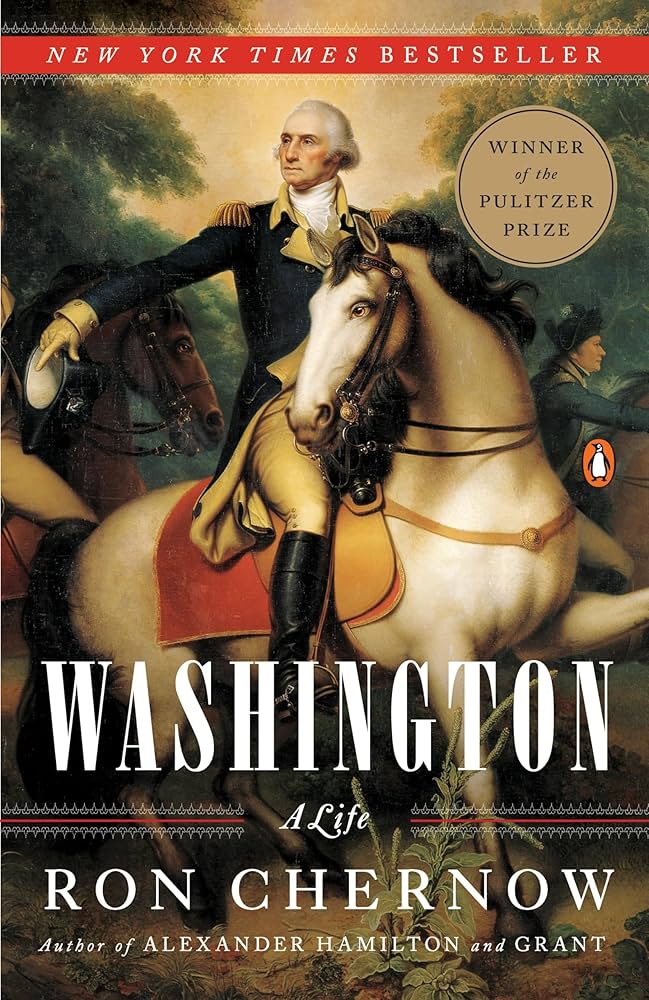
Washington: A Life
Ron Chernow
Thoughts on the Biography
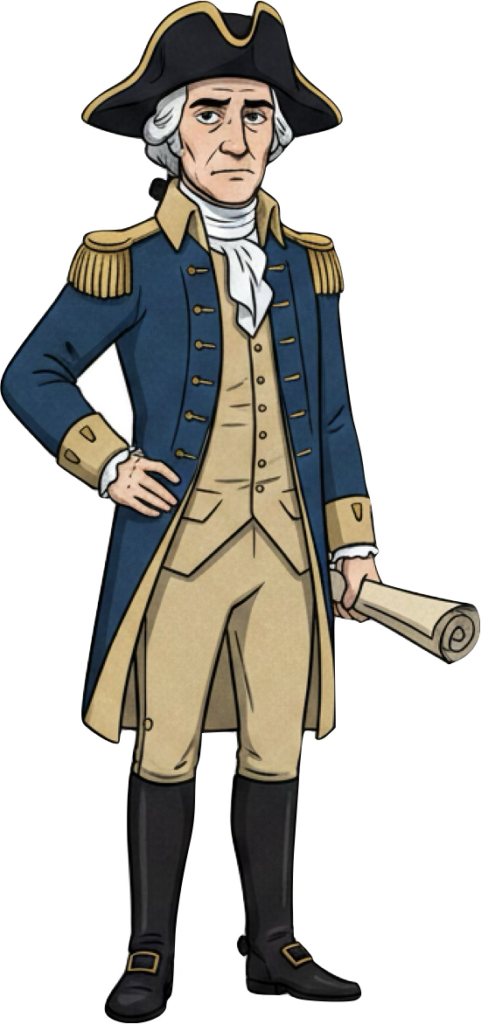
Starting my exploration of presidential lives with Washington set a high bar. Chernow transforms a mythic figure into a compelling study of human leadership, strategic acumen, and moral calculation. Washington emerges as a human being whose decisions, failures, and judicious restraint shaped the American experiment. His story is fascinating. Washington demonstrates very human characteristics such as anger, jealously, embarrassment, worry and is almost maniacal in his concern of his image and posterity. His legendary status today doesn’t seem to be wholly attributed to chance, but at least partially cultivated by the man himself. Chernow brings him to life and presents the same Washington that we all know, but fills in incredible details that the average reader may not have been aware.
Also for readers, his life illustrates that historical figures are more than symbols: they are complex individuals whose successes and mistakes offer lessons in judgment, leadership, and the exercise of responsibility. All of which remain profoundly relevant today.
Extremely well written and captivating, this book will be difficult to surpass with future presidential biographies. For anyone looking to begin a similar journey on reading each president, the decision on which bibliography to begin with doesn’t get easier than this.
Before reading Washington: A Life, my understanding of George Washington was largely shaped by myth: Revolutionary War hero, first president, and the man who voluntarily relinquished power (a rare act in any era). But Ron Chernow’s biography provides a far more nuanced portrait, presenting Washington as a complex individual, ambitious yet cautious, self-conscious yet decisive, and ultimately a figure whose success arose from a combination of strategy, persistence, and human judgment. George Washington appeared as a giant among men, but he also understood his own limitations and leaned on the dazzling brilliance around him.
Early Life and Military Formation
Prior to his fame as the Revolutionary War hero, Chernow traces Washington’s development from his early years in Virginia through the formative experiences of the French and Indian War. What emerges is a leader forged not by innate genius alone, but by circumstance and careful learning. Washington’s early military campaigns were a mixture of modest successes and notable setbacks. Retreats, logistical failures, and misjudged engagements provided a practical education in leadership, strategy, and the psychology of command. Chernow also touches on Washington’s relationship with British military leaders that helped shape his views and discontent during the revolution years.
“He was not a man of sudden genius but of tireless calculation and careful preparation.”
My Takeaway: Admittedly not being versed on Washington, I was shocked at just how human he was. He sought military glory and also put in the work to achieve this. He made political missteps with leaders, feuded with contemporaries and held true grudges. His mother was a burden and almost embarrassment and he was self-conscious of his education. True, he was born with qualities that gave him an edge (6’3″ and fearless), but it was a reminder to me that image can be cultivated as we all have our warts and setbacks. George Washington was no exception.
Leadership Through Delegation and Trust
One of the most instructive aspects of Chernow’s account is Washington’s understanding that effective leadership requires delegation and the judicious exercise of trust. A clear example is Washington’s trust of Henry Knox’s transport of artillery from Fort Ticonderoga to Boston to help push the redcoats out of the city (through an incredible night maneuver). The logistical challenge was enormous, yet Washington provided direction without micromanaging, allowing Knox to leverage his expertise. The success of this operation was pivotal in the early stages of the Revolution and a key, deterministic moment in American history.
Still a more striking example of Washington’s trust happened on September 11, 1775 at his War Council. Washington had a dramatic plan for an amphibious assault on Boston. His eight generals present dissuaded him, highlighting the risks outside of their control. Washington could be persuasive, but he could also lean on the judgement of those around him when necessary.
“His strength lay not in doing everything himself, but in knowing the right people to do the job.”
My Takeaway: I was blown away at the differences between myth and man. His exceptional courage (or recklessness) gave him legendary status. In fact, a few different bullet trajectories may have rendered him to a footnote to history. But even with this legendary status, I grew to appreciate his ability to lean on others. Not just the examples provided above, but even as president, he compiled and incredible cabinet. And though he was later as political odds with James Madison, he recognized his intellect and understanding of the government to help set the stage. Even great leaders such as Washington know how to utilize the talent around them to elevate themselves.
Reputation, Legacy, and the Exercise of Restraint
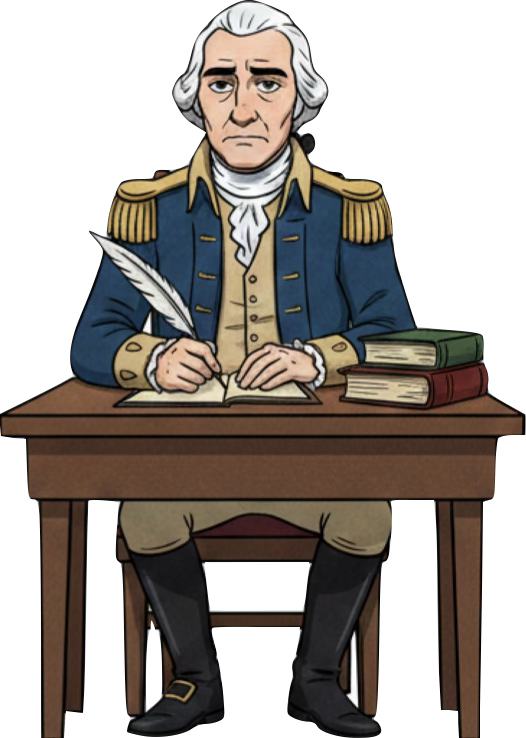
Chernow emphasizes Washington’s profound awareness of historical legacy. Washington cultivated his image deliberately, recognizing that perception could shape both immediate influence and enduring reputation. The most notable expressions of this awareness were his voluntary resignations: first as commander-in-chief of the Continental Army, and later from the presidency after two terms. In an era when leaders frequently clung to power, these actions were extraordinary. King George III reportedly remarked, “If he does that, he will be the greatest man in the world.”
“He has so happy a faculty of appearing to accommodate and yet carrying his point, that if he was really not one of the best-intentioned men in the world, he might be a very dangerous one” – Abigail Adams
My Takeaway: I admittedly wrestled with the way George Washington was humble enough to walk away from absolute power, but still possesses a drive to cultivate his image and mythic status. How should leaders act? Should they put on a mask for others or be their authentic selves (i.e. John Adams)? It’s a difficult question to answer and may not be a one-size-fits-all but credit to Chernow for giving us a theme to debate and reflect.
Personal Life and Partnerships
Chernow also provides insight into Washington’s private life, particularly his marriage to Martha. Far from a mere social arrangement, their partnership was mutually supportive. Martha’s presence and counsel were integral to Washington’s capacity to manage both the logistical and emotional burdens of command and statecraft.
“He cared deeply about how he was remembered, but he was also capable of warmth and loyalty.”
My Takeaway: Washington’s marriage to Martha had no passion (at least assumed as Martha burned nearly every letter). What it did do was give Washington a platform to ‘marry up’ in a society and increase his social status. We see how perhaps Washington craved passion by his often flirtatious encounters with other women. How can we reconcile this in today’s world? Washington may not be the myth we know today if not for these calculated steps as well as not without the aid and support that Martha provided. But, still, I was left wanting. A man as heroic as Washington deserved a passionate, story-book message. But history, it seems, is not always this clean.
Lessons from Washington’s Life
Chernow’s biography yields several concrete lessons that extend beyond historical interest:
- Leadership is relational: Effectiveness derives from the ability to cultivate, empower, and rely on capable people. Washington was able to surround himself and utilize the brightest minds of the times.
- Preparation and reflection are essential: Strategic success is grounded in careful planning and adaptive learning. Sometimes, a retreat allows you fight another day.
- Restraint is a form of strength: Knowing when to relinquish power or step back can have more enduring impact than the exercise of authority itself.
- Human complexity matters: Washington’s flaws, doubts, and moral tensions are inseparable from his achievements, serving as a reminder that human imperfection does not preclude influence or accomplishment. Washington’s careful crafting of his image has allowed these imperfects to be masked over the centuries.
- Support systems are foundational: Martha Washington’s partnership and the trust he placed in his generals demonstrate that leadership and personal achievement rarely occur in isolation. It may have lacked in romantics, but it was a marriage based in respect.
Sidebar / Quick Facts
- Washington desperately wanted glory early in life and felt embarrassed by his lack of formal education.
- His early military career demonstrates that experience, strategy, and adaptability outweigh raw talent or impulse. His decision to retreat and execute those retreats played a large part in the victory. Incredulously, he lost more battles than he won.
- The Newburgh address is sadly forgotten to history. George Washington stopped a mutiny with the power of his speech: “Gentleman, you must pardon me, for I have not only grown gray but almost blind in service to my country.” Hollywood-esque.
- He actively rotated enslaved people out of Pennsylvania to avoid freeing them under state law while serving as president
- Washington began losing his teeth in his 20s. By the time he became president, he had just one natural tooth left.



One Comment