
John Adams: The Relentless Advocate for a Nation
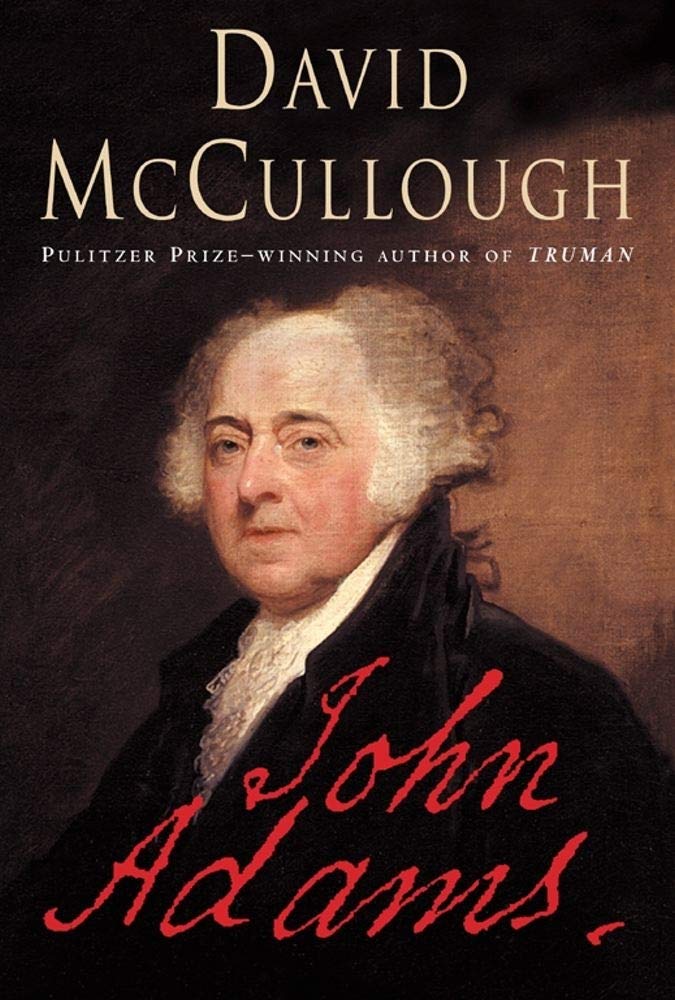
John Adams
David McCullough
Thoughts on the Biography
McCullough’s John Adams is compelling not only as a historical account but as a study of character, intellect, and perseverance. Adams emerges as a man whose contributions were foundational to the Revolution and the presidency, yet whose humanity, ambition, irritability, grief, and loyalty makes him relatable across centuries. Known as thin-skinned and boisterous, McCullough brings Adams to life (even if he’s a bit defensive of the 2nd president).

For readers, Adams’ life demonstrates that leadership is rarely simple or perfect. Success requires persistence, moral courage, strategic thinking, and strong partnerships. His story reminds us that history is shaped by the decisions, temperament, and resilience of individuals lessons that remain profoundly relevant today. John Adams was imperfect as a man and a politician but his place in history is remarkable. He is unapologetically himself. We also get the privilege to see Abigail Adams come to life as part of one of the great power-couple marriages in US history.
David McCullough is a masterful writer. This book would be a page turner for both hobbyist historians and casual readers alike. Even though McCullough writes in a pro-Adams way, I found that refreshing. I want to read an author who is impressed with his subject and I slowly was drawn in to his way of thinking over the course of the book. This will no doubt be one of my favorites in my journey.
Before reading John Adams, my knowledge of him was minimal: the second president of the United States. What McCullough does masterfully is bring Adams to life as a man of fierce intellect, stubborn principles, and relentless energy. He is someone who shaped the American Revolution, navigated early diplomacy, and defined the presidency, all while remaining profoundly human.
Early Career and Revolutionary Leadership
Adams’ role in securing American independence is often overshadowed by other founding fathers, but McCullough makes clear how indispensable he was. He was a tireless advocate for independence, one of the key negotiators of the Treaty of Paris, a contributor/editor of Thomas Jefferson‘s Declaration of Independence and instrumental in securing crucial loans from Holland to fund the Revolutionary War.
Adams’ personality was direct, sometimes thin-skinned, and endlessly driven and it served him well in political and diplomatic arenas. Yet it also made him a target for criticism and rivals, including Alexander Hamilton, with whom he had a long-running feud. His early career demonstrates the interplay of intellect, conviction, and human temperament in shaping history.
“He was never timid in defense of principle, even when it risked personal or political cost.“
My Takeaway: Adams exemplifies the impact of persistence and principle. Major achievements often require assertiveness, resilience, and the courage to challenge peers or institutions. It’s important to understand that John Adams did not shy away from his personality, but, in a sense, owned it and used it to his advantage. Any other approach may have been disingenuous. Perhaps, unlike what we see with George Washington, the best approach is to recognize and use your natural temperament as opposed to spending energy crafting an image or mask.
Diplomacy, Conflict, and the Presidency
McCullough provides a detailed account of Adams’ diplomatic career, including his time in France and the Netherlands, as well as his presidency. One of Adams’ major accomplishments abroad was securing financial support for the American Revolution from Holland, a feat that required both shrewd negotiation and personal tenacity.
As president, Adams faced unprecedented challenges. The XYZ Affair and the quasi-war with France tested his resolve, while domestic tensions surrounding the Alien and Sedition Acts highlighted his complex balancing of security, freedom, and political principle. McCullough portrays these decisions as nuanced: they were controversial, but they also reflected the extreme pressures of preserving a fragile new nation.
“In the midst of political storms, he never lost his commitment to what he believed the country needed.”
My Takeaway: Leadership often involves making difficult, imperfect choices under intense pressure. Adams demonstrates that integrity and courage are as important as popularity or consensus. Sometimes even great leaders can make poor decisions. History may not remember the Alien and Sedition act fondly, but Adam’s role was instrumental in ensuring the success of a new, experimental nation and government and this move was one of several that shaped the early republic.
Personal Life and Partnerships
Adams’ relationship with his wife, Abigail, stands out as extraordinary. McCullough emphasizes her intelligence, insight, and steadfast support, which were vital to Adams’ career and emotional resilience. Their correspondence which was often frank, humorous, and deeply affectionate also reveals both personal depth and the symbiotic nature of their partnership.
Tragedy also marked Adams’ family life. He experienced the deaths of children, including one to breast cancer, one to ‘drunkenness’ and another stillborn, and bore the emotional weight of these losses alongside the pressures of public life. There’s something profoundly human in tragedy that stands the test of time. Even great leaders were people first and bore the weight of loss in their lives.
“Abigail was not only a partner but a keen observer of history and a staunch defender of her husband.”
My Takeaway: In what is expected to be a recurring theme with these early founders, tragedy and heartbreak are prevalent ‘behind-the-scenes.’ It makes it all the more incredible that these men (and women) were able to succeed while carrying the weight of grief. Perhaps it’s useful to recognize that not just any leader, but any one individual throughout history, existed outside of text on page, but had a life filled with the both the joys and sorrows that accompany it.
Relationships with Fellow Founders

Adams’ relationship with Thomas Jefferson is a central thread in McCullough’s narrative. They were collaborators in the Declaration of Independence, adversaries in politics, and later correspondents in old age. Their correspondence, often humorous and reflective, offers a window into the complexities of friendship, ideology, and reconciliation over decades.
As mentioned, Adams also navigated challenging relationships with figures like Alexander Hamilton, whose ambitions and political style clashed with Adams’ more deliberate, principle-driven approach. McCullough captures these dynamics vividly, showing how personal temperament and principle intersect in the forging of a nation.
Even in disagreement, he sought to act with integrity and thoughtfulness.”
My Takeaway: John Adams had many impressive feats, but this may very well be the most striking example of his humility and humanity. Despite a long, often tense, political feud that often resulted in personal and political humiliation with Thomas Jefferson, it was he who first sought reconciliation. It was he who first had the courage to pick up a parchment and reach out to his old friend. This left a deep impression on me and I can imagine both US history and Adams’ own personal life were richer because of it.
Lessons from John Adams’ Life
From McCullough’s biography, several concrete lessons emerge:
- Persistence and principle matter: Adams’ determination in securing independence and financial support shows the impact of steadfast commitment.
- Courage in decision-making: Facing international threats and domestic unrest, Adams made hard decisions even when unpopular. Sometimes being a leader is a lonely endeavor.
- Relationships shape history: Partnerships, correspondence, and alliances (whether with Abigail, Jefferson, or allies abroad) were critical to his and the country’s success.
- Resilience in the face of personal loss: Tragedy and adversity were constant companions, yet Adams persevered. These presidents had lives that don’t make it into history books.
- Leadership requires humility and reflection: Adams’ willingness to leave office peacefully before Jefferson’s inauguration set an early precedent for the peaceful transfer of power, despite a contemporary view that he left so in disgrace. History gives George Washington credit for voluntarily stepping down, but John Adams deserves credit for its continuation.
Sidebar / Quick Facts
- Adams never owned a slave, a noteworthy distinction among founding fathers.
- He and Jefferson reconciled later in life, exchanging letters that reveal humor, reflection, and mutual respect. Adams would write more than 109 letters while Jefferson would respond with around 49.
- He faced criticism for attempting to formalize George Washington as “His Highness, the President” early as Vice President, a nod to the changing times of monarchical rule.
- Abigail Adams was one of the most influential and supportive partners of any president in U.S. history. A testament to her education and intellect.
- John Adams served as the US Minister Plenipotentiary to Great Britain and had a remarkable exchange with King George III following the Revolutionary War.
- HBO’s John Adams was based on McCullough’s book and is an incredible depiction.



One Comment