John Tyler: The Accidental President
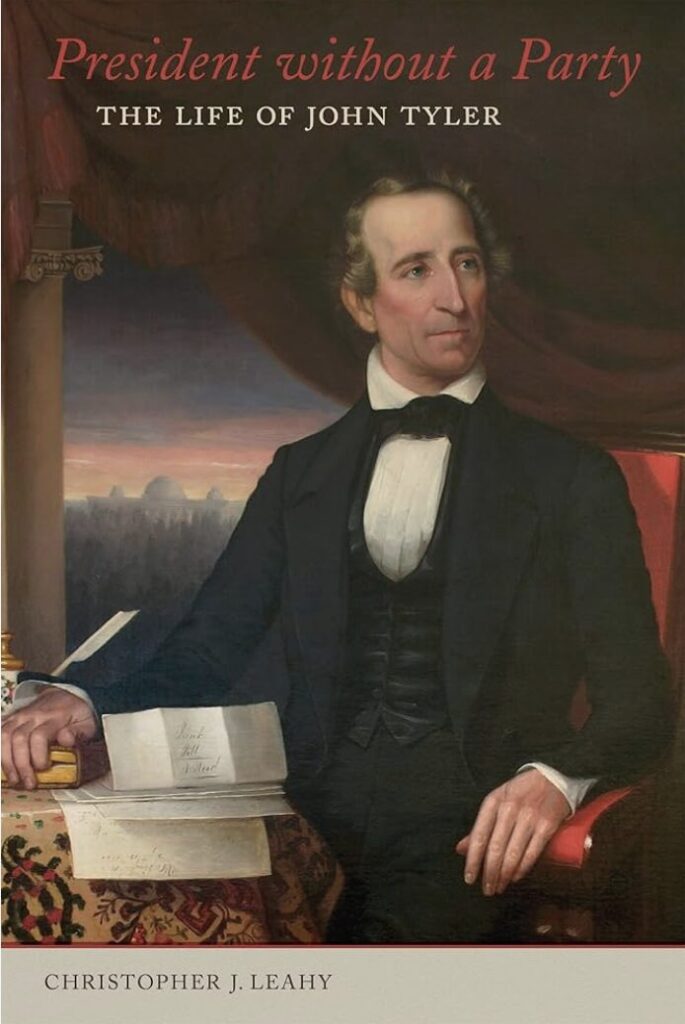
John Tyler: President without a Party
Christopher J. Leahy
Thoughts on the Biography
Christopher J. Leahy’s President Without a Party offers a thoughtful and balanced portrait of John Tyler, a president often remembered primarily as a historical footnote: the first vice president to assume the presidency after the death of a sitting president. Leahy goes far beyond that narrow view, presenting Tyler as a deeply ideological politician shaped by the traditions of Virginia republicanism, personal ambition, and an unwavering belief in states’ rights.
Tyler emerges as a complicated figure. He was principled, stubborn, politically shrewd, and fiercely protective of executive authority once he assumed the presidency. But his personal life reveals a man shaped by the expectations and limitations of his time: a husband often absent from home, a father concerned with legacy, and a politician whose devotion to public life oftentimes overshadowed the needs of his family.
Leahy’s writing is accessible and engaging. The narrative balances political history with personal detail, often drawing from Tyler’s extensive correspondence with his brother-in-law, Henry Curtis, which provides rare insight into Tyler’s motivations and personality. For readers exploring early presidential history or traversing through each president, this biography provides a strong foundation for understanding both Tyler the man and the political world he inhabited.
Before reading this biography, Tyler’s reputation felt narrow. What Leahy demonstrates is that Tyler’s presidency helped highlight the early crisis of succession, the political tension from slavery that defined the early union and, ultimately, how legacy can be defined by the betrayal of that very same union.
Leahy’s writing flows easily while balancing political jargon with his own color commentary and insights on the president. Also sprinkled throughout are quips that I thoroughly enjoyed (i.e. after a party near the end of his term: “for this night, this was a president with a party.”
While this biography won’t stand up with the greats (read: John Adams or George Washington), it’s a captivating biography for one’s journey to learn about John Tyler, both the man and politician, and a great insight into the times.
Early Life and Political Formation
Tyler’s life was shaped early by the influence of his father, John Tyler Sr., who cared deeply about the Tyler family’s standing in Virginia’s political world. His upbringing emphasized reputation, public service, and loyalty to the traditions of the “Old Dominion.”
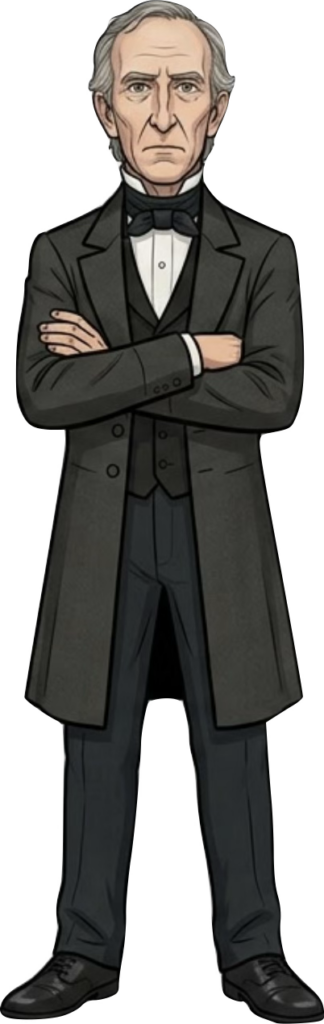
Tyler thrived academically at the College of William & Mary and entered public life at an unusually young age. His legal career was brief but successful, and by his early twenties he had already entered the political arena.
One of his earliest political successes came when he opposed the controversial Compensation Act, a move that resonated with his constituents and helped establish his reputation as a defender of public accountability.
Ideologically, Tyler identified strongly with the “Old Republican” tradition associated with Thomas Jefferson. He opposed federal expansion in nearly all forms, voting against internal improvements, a national bank, tariffs, and even the Missouri Compromise.
Leahy offers a particularly strong explanation of the Missouri Compromise debate, highlighting Tyler’s reasoning. While modern readers often view the issue primarily through the lens of slavery, Tyler framed his opposition around federal overreach and states’ rights. Whether one accepts that justification or not, it illustrates the ideological consistency that defined much of his career.
“Tyler’s political worldview was rooted firmly in the belief that federal power must remain limited.”
My Takeaway:
Tyler demonstrates how early political identity often shapes an entire career. His adherence to Jeffersonian principles defined both his successes and his conflicts. Once a leader commits deeply to a governing philosophy, flexibility becomes difficult. In Tyler’s case, ideological consistency was both his strength and his political liability.
Retreat from Politics and Return to Public Life
At just 31 years old, Tyler stepped away from national politics. Poor health, family responsibilities, and a sense that he held little influence in Congress contributed to his decision.
But like many politicians of ambition, the retirement was temporary.
He soon returned to politics through the Virginia legislature, eventually rising to become governor of Virginia. During this period, Tyler initially supported John Quincy Adams in the election of 1824, though he later regretted the decision when Adams pursued a more nationalist agenda.
Tyler’s career soon intersected with one of the defining political figures of the era: Andrew Jackson.
Initially aligned with Jacksonian Democrats, Tyler’s devotion to states’ rights ultimately placed him in an impossible position during the conflicts over nullification and Jackson’s war against the national bank. Rather than compromise his principles, Tyler resigned from the Senate. This was an act that pushed him out of the Democratic Party and toward the emerging Whig coalition.
Ironically, Tyler would soon find himself equally uncomfortable in that party as well.
My Takeaway:
Political coalitions often form out of opposition rather than shared philosophy. Tyler’s experience illustrates the danger of joining a political movement whose core beliefs do not align with your own. Temporary alliances can quickly turn into long-term conflicts.
Family Life and Personal Relationships
Leahy dedicates meaningful attention to Tyler’s family life, particularly to his marriages to his first wife, Letitia Christian Tyler and later to Julia Gardiner Tyler.
His marriage to Letitia appears to have been at least initially cordial rather than passionate. Letitia endured the enormous physical toll of eight (or nine) pregnancies while Tyler spent roughly half of each year away pursuing politics. Her life reflects the realities faced by many women of this era. A life marked by limited autonomy, immense domestic responsibility, and a husband whose career often took precedence.
Despite this distance, Tyler cared deeply about his children and their education. His relationship with his eldest daughter, Mary, appears to have been particularly close.
Leahy handles this subject thoughtfully, acknowledging that while Tyler’s behavior may appear harsh through a modern lens, it was largely typical for elite Southern political families of the period.
“Tyler loved his family, but politics remained the central focus of his life.”
My Takeaway:
Historical figures must often be understood within the cultural norms of their time. Tyler’s family life highlights the tension between public ambition and personal responsibility. Leadership in public life has always carried private costs—costs that often fall most heavily on families.
The Accidental Presidency
Tyler’s place in history was ultimately secured by an unexpected moment.
In 1840, he joined William Henry Harrison on the Whig ticket largely to balance regional interests. The vice presidency was expected to be ceremonial, and Tyler planned to spend much of his term quietly managing his legal practice in Virginia.
Everything changed when Harrison died just weeks after taking office.
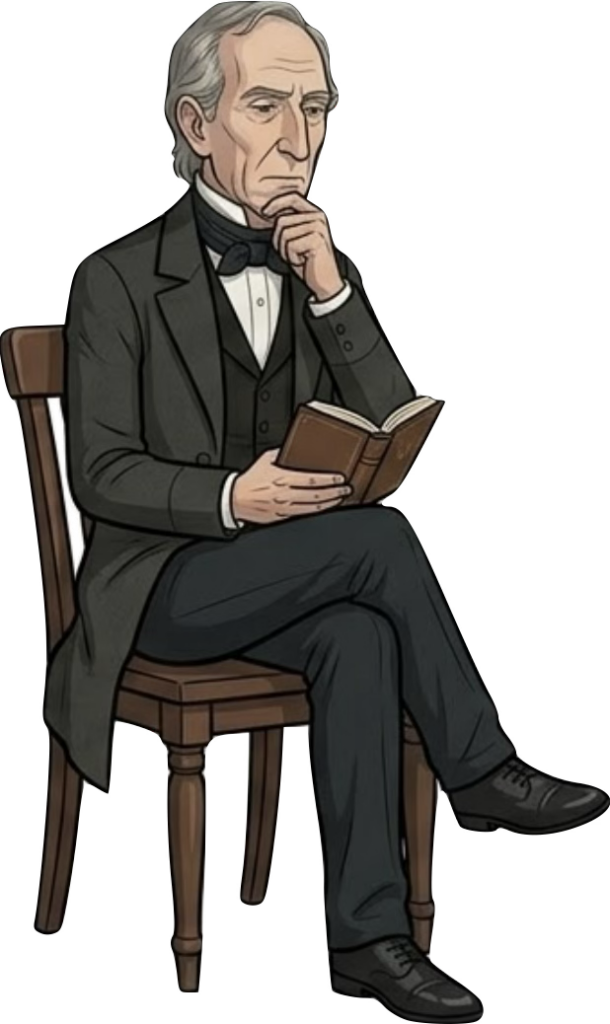
Upon learning the news in Williamsburg, Tyler immediately returned to Washington and took the presidential oath. Though the Constitution was ambiguous about whether a vice president became “acting president” or fully assumed the office, Tyler insisted on the latter.
“I am the President, and I shall be held responsible for my administration.”
This decision established what became known as the “Tyler precedent” in which the vice president becomes the full president upon the death of the incumbent. The practice continued for more than a century before being formally codified in the Twenty-fifth Amendment to the United States Constitution.
It was arguably one of the most consequential constitutional precedents in American history and shaped by the immediate actions of Tyler.
My Takeaway:
Leadership sometimes hinges on decisive action during moments of ambiguity. Tyler’s insistence on fully assuming the presidency prevented a constitutional crisis and clarified executive authority. In doing so, he strengthened the stability of the American system.
Conflict with the Whigs
Tyler’s presidency quickly descended into conflict with the party that had elected him.
Led by Henry Clay, congressional Whigs sought to pass legislation establishing a new national bank. Tyler vetoed the bill within days, citing constitutional objections rooted in his long-held Jeffersonian beliefs.
When Congress attempted a revised version, Tyler vetoed that as well.
The result was political chaos. Nearly his entire cabinet (including several leading Whigs) resigned in protest, leaving only Daniel Webster in place.
Tyler soon found himself politically isolated, a president with no party and little congressional support.
He briefly attempted to build a new political coalition around his presidency, but the effort failed. Tyler gradually recognized that his political future would likely end after a single term.
My Takeaway:
Political success often requires coalition-building, not just ideological consistency. Tyler’s inability or unwillingness to compromise left him isolated, demonstrating how difficult it is to govern without institutional support.
Texas and the Final Achievement
Despite his political isolation, Tyler achieved one major policy success in the annexation of Texas.
Working through a joint congressional resolution rather than a traditional treaty, Tyler successfully laid down the foundation for the annexation of the Republic of Texas into the United States.
The move reshaped American expansion and profoundly influenced the nation’s future, despite arguably igniting the Mexican-American war in the following years.
It also dealt a final political blow to his long-time rival Henry Clay, one that Tyler surely took comfort in.
Late Life and Legacy
Following the death of his first wife Leticia, Tyler remarried Julia Gardiner Tyler, who was thirty years younger than him.
Their marriage, by most accounts, was happy. The couple settled at Sherwood Forest plantation in Virginia and began another large family. Tyler appeared to enjoy fatherhood in a more present and engaged way than he had earlier in life.
Yet the final chapter of his life would overshadow much of his earlier legacy.
As sectional tensions grew, Tyler initially sought compromise to preserve the Union. Over time, however, he became convinced that secession was inevitable. At the Virginia peace convention, he supported proposals that essentially affirmed a state’s right to leave the Union.
He ultimately joined the Confederate States of America and was elected to its Congress.
When Tyler died in 1862, Abraham Lincoln did not order flags lowered to half-mast. Much of the Union refused to acknowledge the death of the former president.
Tyler had become, in the eyes of the nation he once led, a traitor.
My Takeaway:
Few presidential legacies end in such a complicated way. Tyler helped preserve constitutional stability during a moment of crisis, yet his final political choices aligned him with a rebellion against that same Union. History sometimes remembers leaders not only for their achievements but for the final causes they choose to serve.
Lessons from John Tyler’s Life
Several themes emerge from Leahy’s biography:
- Principles shape careers: Tyler’s devotion to states’ rights defined nearly every decision he made.
- Moments of ambiguity require decisive leadership: His immediate assumption of the presidency prevented constitutional confusion.
- Political isolation can undermine governance: Without party support, even a determined president struggles to advance policy.
- Public ambition often comes with private cost: Tyler’s family life reveals the sacrifices made behind the scenes of political careers.
- Legacy is shaped by final choices: Tyler’s decision to support the Confederacy overshadowed, perhaps rightfully so, many earlier accomplishments.
Sidebar / Quick Facts
- Tyler was the first vice president to become president after a presidential death, establishing a precedent that lasted until the 25th Amendment.
- Nearly his entire cabinet resigned after his veto of the national bank bill.
- His first wife, Letitia, died while he was in office, making her the first First Lady to die in the White House.
- Tyler later married Julia Gardiner, who was 30 years younger than him.
- He fathered more children than any U.S. president (15).
- Probably most famously noted, Tyler had a living grandson in the year 2025.
- Tyler is the only U.S. president buried under a Confederate flag.