Martin Van Buren: The Little Magician Behind the Machine
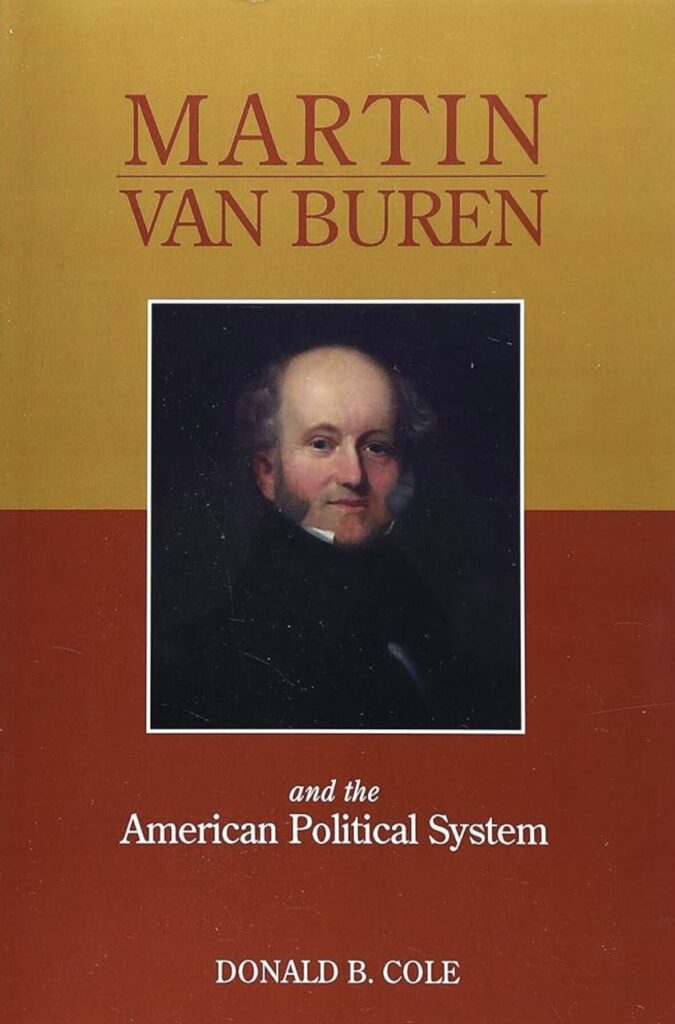
Martin Van Buren and the American Political System
Donald B. Cole
Thoughts on the Biography
Donald Cole’s Martin Van Buren and the American Political System weaves in and out of a traditional biography and an institutional study of how American politics matured in the early nineteenth century, particularly with a focus on New York Politics. Van Buren is discussed and focused as the most skilled operator within it. The result is a book that is deeply informative, carefully argued, and at times frustratingly distant from its subject as a human being.
Cole is just as interested in how Van Buren worked along with who he was. That choice aligns well with Van Buren’s own life, mirroring a subject who always balanced his political image and views without allowing his self and personality to shine. I came away much more versed in the creation of the Regency and Van Buren’s master political maneuvering, but still wondering more about the man who built it.
The resulting biography, however, passes the test for readers interested in learning more about a president that history focuses less on. You learn why he was labeled the “Little Magician,” and how he ascended from the Dutch area in Kinderhook all the way to the highest office. The reading overall is admittedly dry. In contrast to previous bibliographies, I never had an issue putting the book down. It almost became a chore to get through rather than a captivating read. For that reason, I wouldn’t recommend this biography to anyone who didn’t have a focused goal of learning more about Martin Van Buren as opposed to looking for solid entertainment.
The Little Magician and the Machinery of Power
The strongest sections of the book focus on Van Buren’s political genius. Cole makes a compelling case that Van Buren was one of the most naturally gifted political minds the country has produced. Long before national parties fully crystallized, Van Buren understood that durable political power required organization, discipline, loyalty, and message control.
The creation and use of the New York Regency stands as his most important contribution and changed American politics forever. This was politics as systematic structure that, in no small part, was a response to the arguably undemocratic caucusing structure in place that (among other reasons) kept Andrew Jackson out the presidency in 1824. Van Buren treated political alliances as things to be maintained carefully over time, not burned for short-term gain. Every decision was calculated and every move had a constituency in mind.
This carefulness earned him the nickname “The Little Magician,” and the book demonstrates that the reputation was deserved. Van Buren rarely acted impulsively. He avoided ideological rigidity and instead prioritized coalition-building. If there is a central theme to his life, it is that politics, for Van Buren, was always the primary lens through which the world was viewed.
Van Buren was “… a most extraordinary man [who] could launch imputations by a look, a shake of a long finger, or a shrug of his shoulders.”
My Takeaway: Van Buren made American politics a true profession and built a machine that would ultimately become the Democratic party. The system that elevated him was, in many ways, his own creation. It does make one pause and reflect about how to navigate a world (compared to different style like, say, John Adams).
Jackson, Loyalty, and Strategic Ambiguity
Van Buren’s relationship with Andrew Jackson is one of the most interesting dynamics in the book. Cole shows how Van Buren embedded himself into Jackson’s inner circle by mastering restraint rather than dominating conversations, a shrewd and on point approach for the “sly fox”. He offered opinions sparingly, often only after carefully assessing where various factions stood.
This was especially evident during moments like the Bank War. Van Buren’s caution was not indecision as much as it was strategy. He understood that survival in Jackson’s orbit required loyalty without confrontation. Over time, Jackson came to value Van Buren’s counsel precisely because it was measured and politically informed, whether Andrew Jackson realized this or not.
Van Buren’s rise then from Kitchen Cabinet confidant to vice president illustrates his greatest strength and, eventually, his greatest weakness. He was excellent at navigating someone else’s presidency. Leading one proved far more difficult as he would struggle to find ground in his own presidency.
My Takeaway: Van Buren mastered the art of influence without ownership. That skill elevated him quickly but left him exposed once the responsibility became fully his. Some people, it seems, are more adept at operating in the shadows and pulling the strings and can struggle with the spotlight is thrust. It’s telling that Van Buren was able to maneuver all the way to the presidency but struggled once reaching this pinnacle.
A Man Hard to Know
One of the book’s quiet frustrations is how little we learn about Van Buren’s inner life. Cole provides the facts in touch and go moments. His wife died young, he never remarried, and he raised his sons with care and attentiveness. The evidence suggests a devoted family man, but the emotional texture is thin.
This absence may be intentional. Cole seems to argue, implicitly and then explicitly, that Van Buren buried himself beneath layers of social graces and political calculation. The “real” Van Buren, if there was one, remained largely inaccessible… perhaps even to himself.
Unlike other presidents, there is no defining passion here and no burning ideological core. On issues like slavery, Van Buren’s positions shifted with political necessity. His Free Soil stance later in life contrasts sharply with earlier efforts to downplay sectional conflict. Even his apparent acceptance of Southern secession feels less like conviction and more like resignation.
The comparison to Jackson is unavoidable. Where Jackson would have fought for the Union, Van Buren calculated.
My Takeaway: Van Buren may be the best example of a president whose personality dissolved into politics. The cost of constant calculation is that character becomes difficult to measure. Perhaps there is good that can come from losing oneself into a political cause, but one must ask at what price? Or maybe individuals like Van Buren are just born to think differently and apply the strengths they have.
Style, Image, and the Presidency
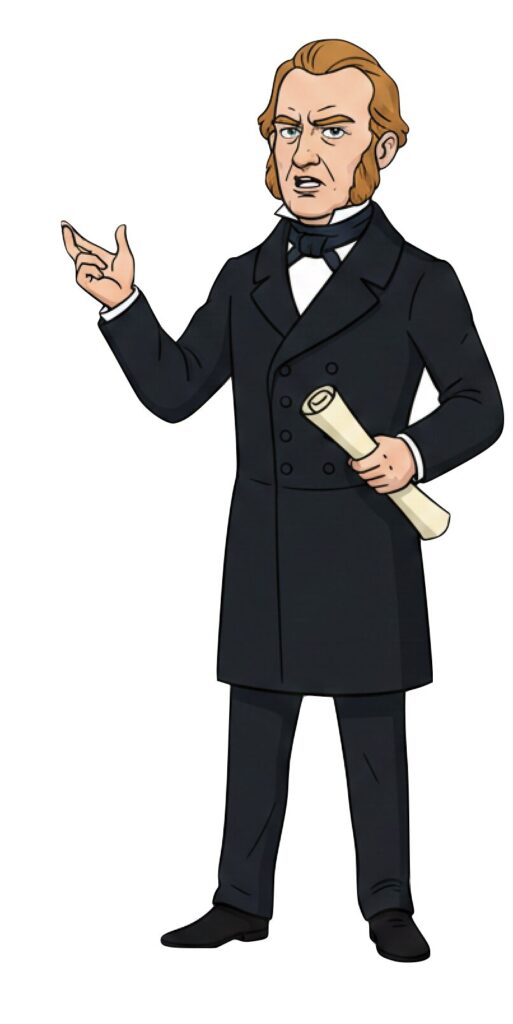
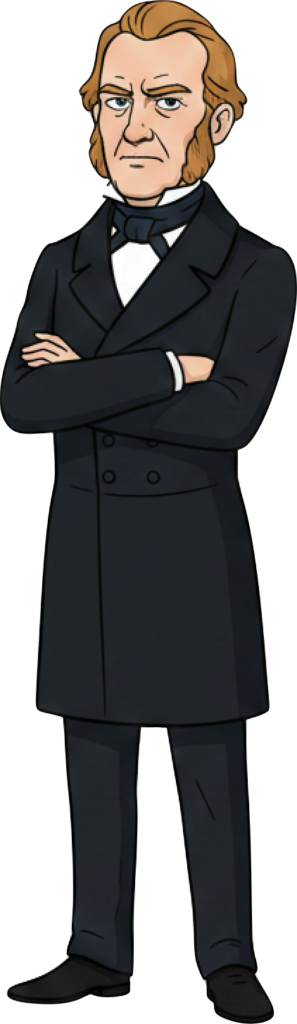
Cole includes an interesting physical evolution of Van Buren as he approached the presidency. The flamboyant dandy of earlier years gradually gave way to a more restrained, presidential appearance. His hair grayed, his waist thickened, and his dress became more sober. Even visually, Van Buren seemed to be preparing himself for the office.
Hey may have looked more the part, but yet once there, the talents that brought him to the White House proved ill-suited for governing amid crisis. The Panic of 1837 demanded decisiveness, moral clarity, and public confidence. Van Buren’s instinct for balance and caution, so effective in party building, became liabilities.
His presidency revealed the limits of political fluidity. The system builder struggled when the system failed.
He was neither a successful nor a great president, for he failed to grow in the White House and if anything showed signs of losing some of his native strength and agility.
My Takeaway: Not all political genius translates into executive leadership. Van Buren’s presidency shows how different the skills of ascent and governance truly are.
Lessons from Martin Van Buren’s Life
- Political systems did not emerge naturally even though James Madison has predicted it. They are built by people who understand incentives and loyalty and Van Buren knew it better than most.
- Strategic ambiguity can sustain power, but it rarely inspires trust or devotion. Whether circumstance of personality, Van Buren failed to adapt to his new role as president.
- Party-building skills do not automatically translate into crisis leadership. Van Buren sought to try and continue what Andrew Jackson was doing, perhaps in an attempt to be political.
- A life lived entirely through politics may achieve success while leaving little personal trace behind. Sometimes life requires a pause for introspection.
Sidebar / Quick Facts
- Martin Van Buren was the first president born after American independence, entering the world in 1782.
- He spoke Dutch as his first language and learned English later. The only president ever to speak English as a second language.
- Van Buren served as U.S. ambassador to Great Britain and reportedly enjoyed diplomatic life in London.
- He earned the nickname “The Little Magician” for his ability to organize and manage political coalitions. The Albany Regency was one of the earliest and most disciplined political machines in US history.
- Van Buren was a lifelong widower after the death of his wife, Hannah Hoes Van Buren, in 1819.
- Despite his political skill, Van Buren served only one term as president, largely due to the economic crisis during his administration.
- He is one of the few presidents to be defeated for reelection immediately after a full term.